Area Real Estate News & Market Trends

You’ll find our blog to be a wealth of information, covering everything from local market statistics and home values to community happenings. That’s because we care about the community and want to help you find your place in it. Please reach out if you have any questions at all. We’d love to talk with you!

April 29, 2026

San Diego Housing Market: 3 Myths Buyers Need To Stop Believing Now

San Diego Wooden Houses

There’s a lot of uncertainty right now and that’s leading to some dramatic headlines. And if you’re thinking about buying a home, that can make you feel a little less sure about your decision.

A recent study by CNBC asked homebuyers what they’re most worried about, and three themes kept coming up again and again:

  • Mortgage rates
  • The number of homes for sale
  • Home prices

But a lot of what you may be hearing on those is based more on misconceptions. Not facts. So, let’s break it down and separate fact from fiction.

Misconception #1: “I’ll Just Wait, Because Mortgage Rates Are Going To Fall Dramatically”

One idea doing its rounds on social is that mortgage rates are going to drop dramatically soon. So, it’s better to wait to buy.

But is that really what’s expected?

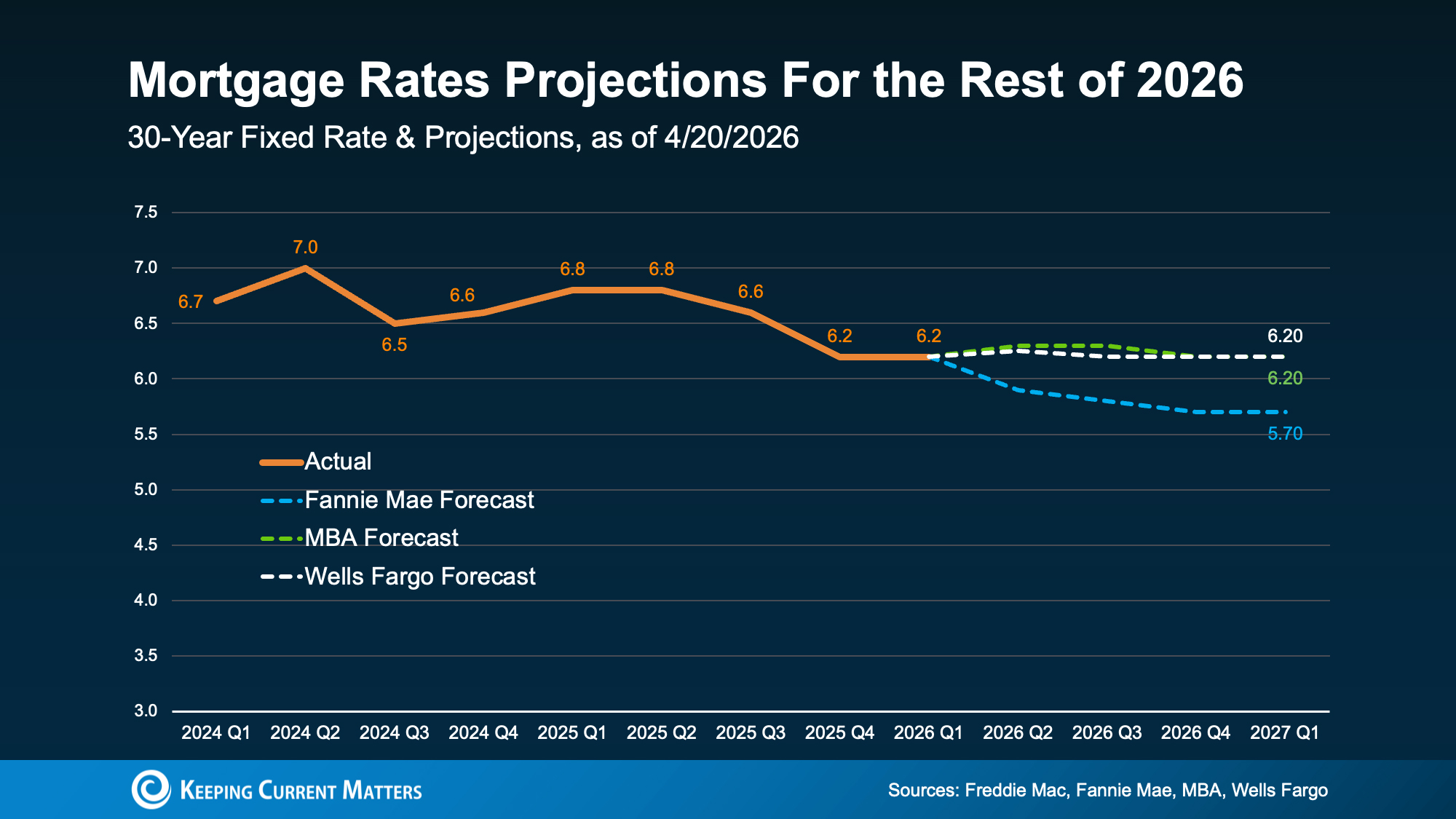
While mortgage rates have come down a bit in the last few weeks, forecasts don’t show a major drop ahead. The most likely scenario is that rates stay somewhere in the low 6% range this year. 

And that’s not a big change from where rates are now (see graph below): 

Mortgage rate predictions 2026

Of course, this depends on where inflation and the economy go from here. But, based on what we know today, waiting for a big drop in rates may not work out the way some people hope. As U.S. News explains:

“Mortgage rates aren’t expected to change much over the next several quarters . . .”

Not to mention, even with rates where they are today, it’s already more affordable than a year ago. So, even if they don’t change much, it’s still better than it was.

Misconception #2: “There Are Too Many Homes for Sale Right Now”

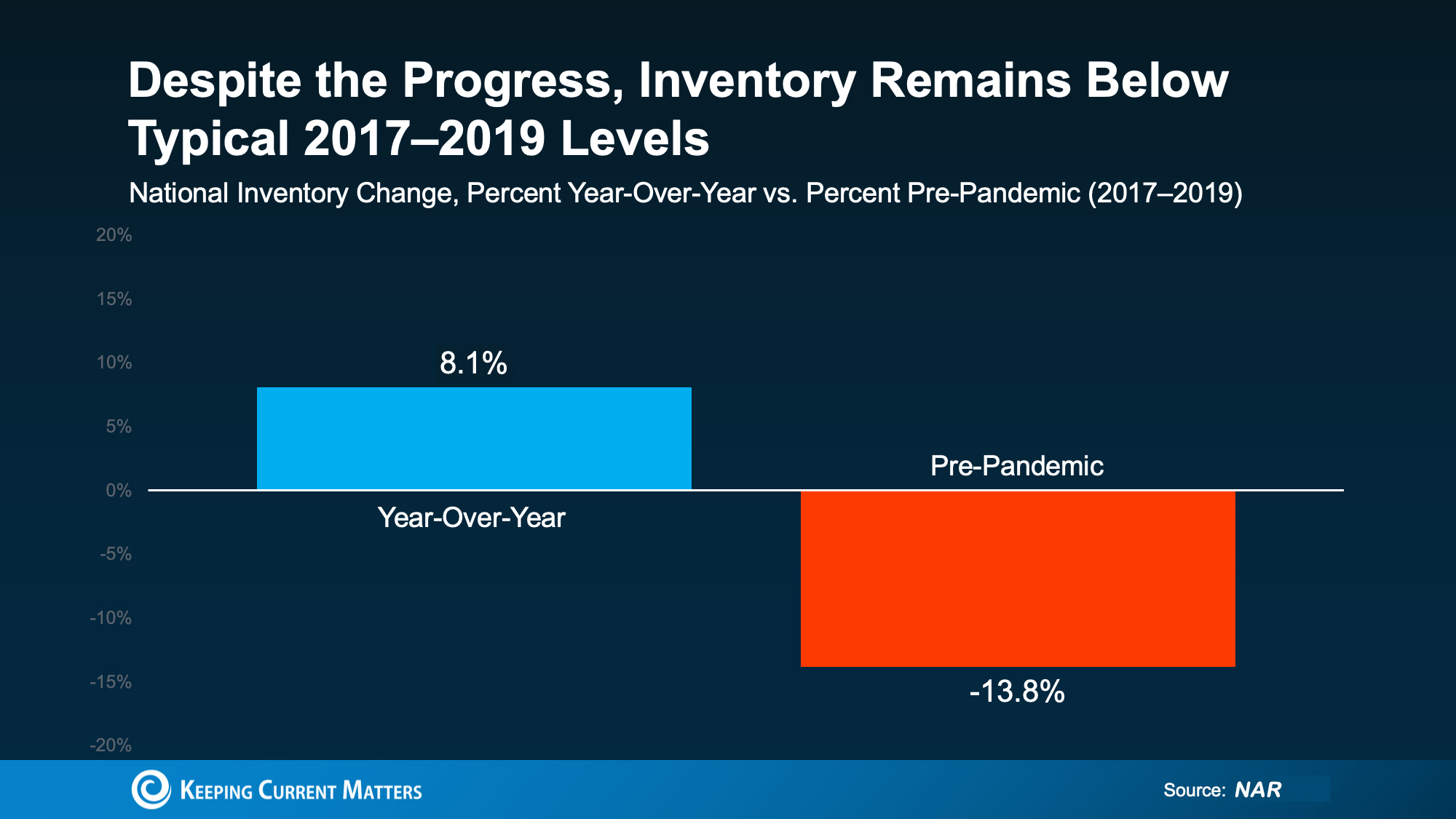
You’ve probably heard inventory is up. And nationally, it is. The number of homes for sale is 8% higher than this time last year. But that’s not a bad thing. In fact, it’s one of the reasons buyers have a bit more breathing room right now.

The problem is the headlines are making something good, sound bad. They’re focusing on how this is the most inventory we’ve had since 2019 or how many homes builders are building. And that can make it sound like the number of homes for sale is rising too far, too fast.

But that’s not what the bigger picture shows.

Data from NAR proves that, even though inventory is up compared to last year, it’s still nearly 14% lower than it was during the last normal housing market (2017-2019):

San Diego Housing Inventory Levels 2026

While it can vary a lot based on where you live, only 9 states have more inventory than pre-pandemic today. That’s a key reason why there still aren’t enough homes for sale to trigger something like the crash back in 2008.

Misconception #3: “Home Prices Are About To Crash”

You’ve probably seen this one, too. The confusion is coming from the fact that some metros are experiencing slight price declines. And influencers are running with that and saying prices are crashing. But that’s not the reality.

Most areas are seeing prices rise, not fall. And that’s because:

  • Many homeowners aren’t selling because they don’t want to give up the low mortgage rate they locked in a few years ago. And that’s keeping a lid on how much inventory can grow.
  • Since inventory is still below pre-pandemic norms, there aren’t enough homes for sale to cause a price crash.
  • And even in markets with more inventory, some sellers are choosing to pull their homes off the market instead of cutting prices.

And those are 3 big reasons prices aren’t headed for a crash. 

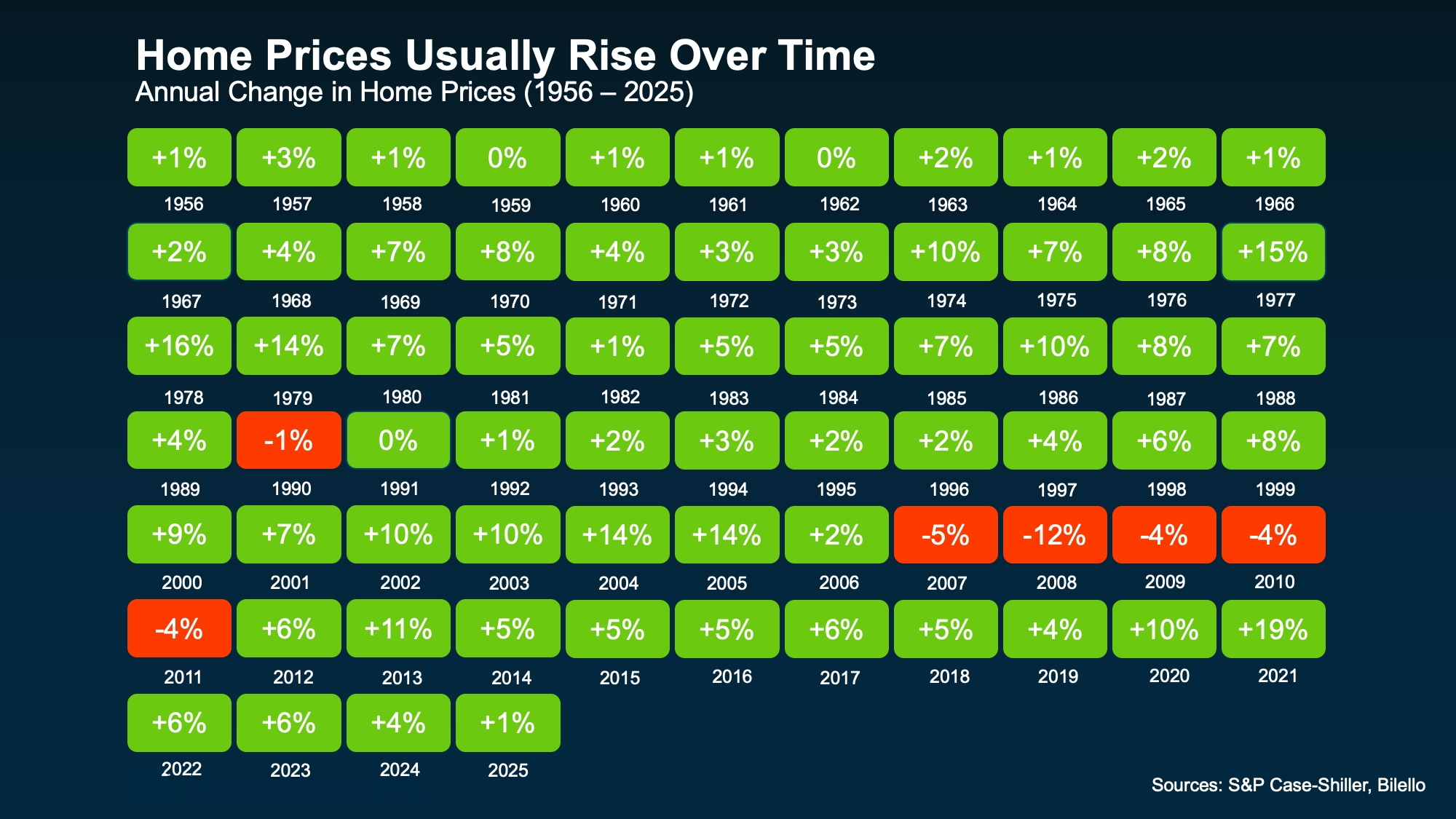
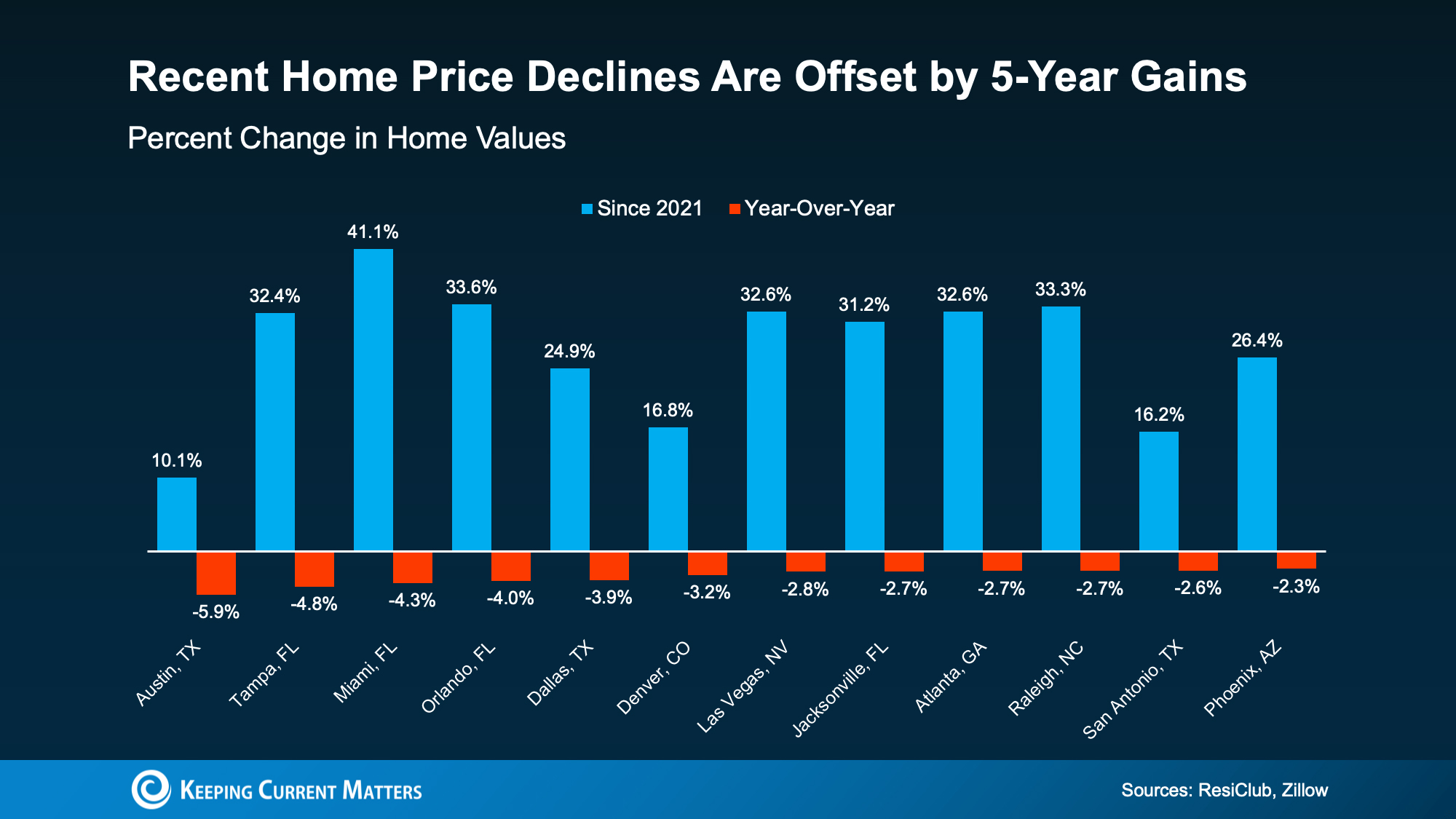
And even in the markets experiencing mild declines, the drops aren’t enough to cancel out the big gains most homeowners have seen in the last 5 years (see graph below):

San Diego Home Price Declines 2026

That’s not a crash. That’s just prices moderating after a few record-breaking years.

Bottom Line

Online posts are going to make things sound worse than they are. If you want a true, data-bound look at what’s really happening in today’s market, lean on a real estate agent.

Connect with us, Hennin Foreman and The DHC Group, so you have someone to separate fact from fiction today.


Posted in Market News
April 21, 2026

San Diego Housing Market 2026: Unseasonably Slow As Iran War, High Costs Curb Demand

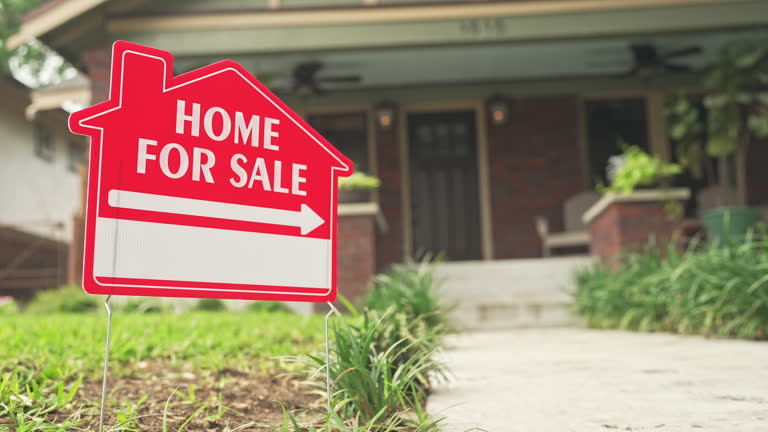
For sale” yard sign in front of a residential home in San Diego, showcasing the active San Diego housing market. Bright, sunny curb appeal highlights a single-family home in a desirable neighborhood, reflecting rising inventory and real estate opportunities in San Diego County.

The San Diego housing market in 2026 is entering spring with less momentum than usual. While demand hasn’t disappeared, higher mortgage rates and affordability challenges are slowing buyer activity across the region.

San Diego Home Prices in 2026

Home prices remain elevated, but growth has cooled:

  • Median home price: ~$915K–$930K
  • Typical home value: ~$1.0M
  • Year-over-year change: down ~3%–5.7%

After years of rapid appreciation, the San Diego housing market is stabilizing. Buyers are no longer rushing, and pricing strategy is becoming more important for sellers.

Mortgage Rates in San Diego (April 2026)

Mortgage rates continue to shape affordability:

  • 30-year fixed rate: ~6.3%–6.34%
  • Still significantly higher than pandemic-era lows

Even small rate changes have a big impact in a high-cost market like San Diego, increasing monthly payments and reducing purchasing power.

Housing Demand Is Slower This Spring

Spring is typically the busiest season, but 2026 is different.

  • Homes are taking 21–34 days to sell
  • Buyer activity is more cautious
  • Negotiations are more common

Compared to the ultra-competitive market of recent years, San Diego homebuyers now have more time and leverage.

Inventory Is Rising in San Diego

Housing supply is increasing, shifting market dynamics:

  • More active listings compared to 2025
  • Fewer bidding wars
  • More price reductions on overpriced homes

Well-priced homes still sell quickly, but the market is no longer forgiving to overpricing.

Affordability Remains the Biggest Challenge

Affordability continues to limit demand in the San Diego real estate market:

  • High home prices near $1M
  • Elevated mortgage rates
  • Rising cost of living (gas, food, utilities)

Many buyers are pausing their search or adjusting expectations, especially first-time buyers.

What to Expect for the Rest of 2026

The San Diego housing market forecast for 2026 points to a more balanced environment:

  • Slower price growth or modest declines
  • Increased inventory
  • Continued sensitivity to mortgage rates

If rates decline later in the year, buyer demand could rebound. Until then, the market is expected to remain steady but subdued.

San Diego Leading Indicators (April 2026)

Indicator

Current Value

Recent Trend

Year-over-Year Trend

Median Home Price

~$920,000

Slight monthly fluctuations

Down ~3%–5%

Average Days on Market

21–34 days

Homes taking longer to sell

Up vs. spring 2025

Active Listings (Inventory)

Rising

Increasing through spring

Up year over year

Sale-to-List Price Ratio

98%–99%

More buyer negotiation

Down from 100%+ peak

30-Year Fixed Mortgage Rate

~6.3%

Slightly lower than early 2026 highs

Still elevated

Buyer Activity (Showings & Offers)

Moderate

More cautious demand

Below 2025 spring levels

Posted in Market Updates
April 13, 2026

Headlines About Home Prices Aren't Telling the Full Story

Spend 5 minutes online searching for news about the San Diego housing market, and odds are you’ll see something pop up about home prices. You may even stumble onto social media influencers saying we’re headed for a crash. Let’s get the context you need.

The truth is prices are going to vary depending on what city, and even the neighborhood you live in. But they’re not crashing.

Here’s what you need to know.

The Local Perspective: Home Price Trends by Area

The biggest thing feeding into the confusion online is how different home price trends are by area right now. Take a look at this data from ResiClub and Zillow (see graph below).

About half of the largest metros are seeing prices go up.

The other half are seeing some small declines.

Home prices aren’t crashing—markets are shifting. San Diego real estate remains resilient with steady long-term growth and local trends telling the real story.

Unfortunately, the online chatter only focuses on the markets where prices are down – and that makes it sound like something bigger is happening.

But, as you can see in this graph, that’s only one side of the story. The full picture is different.

The National Perspective: Moderate Price Growth

As a country, when you average it all together to get a true baseline, one thing becomes clear, home prices are still net positive at the national level.

According to the NAR, national home prices were up about 1% year-over-year in February. So, what we’re seeing right now isn’t a collapse. It’s a market that’s normalizing after a period of unusually fast growth. And that impacts some local markets more than others – particularly those where prices rose too far, too fast and after during the pandemic. 

A true crash, like what happened in 2008, would mean prices dropping sharply across the entire country. That’s just not what the data shows today. And it’s not where things are headed in Southern California either.

Experts Agree This Isn’t 2008

In fact, Fannie Mae surveyed over 100 housing market experts to ask their opinions on where prices are headed from here. And the experts agree, nationally, prices are expected to keep rising over the next five years

Home prices aren’t crashing—markets are shifting. San Diego real estate remains resilient with steady long-term growth and local trends telling the real story.

That rise will be moderate, particularly this year, but the trend is clear. Nationally, prices are forecast to grow every year now through at least 2030 – and that’s normal. Take a quote from earlier this year:

House prices aren’t going to fall on a national scale any time soon—and that’s actually a good thing. It’s normal for house prices to rise gradually over time . . .”

That’s why even in the select areas where prices have dropped slightly this year, the decline is expected to be temporary. According to that same quarterly Fannie Mae survey mentioned above, 85% of the experts say the markets that are seeing mild declines right now will return to positive price growth before the end of 2027.

The main takeaway? This isn’t a crash. And prices aren’t expected to fall nationally. If anything, the few areas experiencing declines are expected to rebound in the next year or so.

Bottom Line

It’s easy to get caught up in headlines that make it sound like something big is about to happen. But don’t be fooled. The Southern California housing market isn’t crashing. It’s just shifting.

The key is understanding what’s actually happening in the San Diego market, so you can make the right move for you. Let’s connect when you want a local perspective from a seasoned professional.

Posted in Market News
March 31, 2026

A New Chapter for Mission Valley: Inside the Riverwalk Transformation

Mission Valley’s Riverwalk project transforms former golf course into vibrant, transit-connected community

If you’ve recently taken a ride along the Green Line through Mission Valley, you may have noticed something exciting happening just beyond the trolley windows—construction is back in full swing. What was once the familiar Riverwalk Golf Club is now evolving into something much bigger: a vibrant, walkable community that promises to reshape the heart of San Diego.

After a brief pause in 2024 due to shifting financial conditions, the $4 billion Riverwalk project is officially moving forward again. Backed by fresh financing and renewed confidence from developers, this ambitious plan is more than just a construction project—it’s a long-term vision for how urban living in Mission Valley can look and feel.

So, what exactly is coming?

The Riverwalk development will span roughly 200 acres, transforming the area into a dynamic neighborhood where people can live, work, shop, and relax—all in one place. The first phase alone will bring over 700 apartments and townhomes, including both market-rate and affordable housing options. Alongside these homes, plans include a village green, retail spaces anchored by a grocery store, and a brand-new trolley station to improve connectivity.

But that’s just the beginning.

Once completed, Riverwalk is expected to feature around 4,300 homes, over 150,000 square feet of retail, and up to one million square feet of office space. What really sets the project apart, though, is its emphasis on outdoor living. Nearly half the site will be dedicated to parks and open space, including a large regional park, restored river habitats, and an extension of the River Trail—creating a greener, more accessible environment for residents and visitors alike.

For locals and commuters, the transformation is already becoming visible. Watching the progress from the trolley offers a front-row seat to a rare kind of urban evolution—one that blends modern development with environmental restoration and community-focused design.

There’s also a sense of anticipation in the air. This isn’t just about new buildings; it’s about creating a neighborhood from the ground up. A place where people can stroll through parks, grab groceries nearby, hop on transit, and feel connected to both nature and city life.

With the first phase targeted for completion in the coming years, Riverwalk is steadily moving from vision to reality. And whether you’re passing by on the trolley or planning to call it home someday, it’s clear that Mission Valley is on the cusp of something transformative.

Stay tuned—this is one development story that’s just getting started.

Want to talk about moving to Mission Valley? Message/DM us below or give us a call...619-701-6542

Posted in Market News
March 24, 2026

Days on Market (DOM): What Does It Mean and Why Is It Important?


For sale sign in front of a suburban home with a calendar overlay, symbolizing days on market and real estate timing

Days on market (DOM) is the number of days a home is listed for sale before going under contract. The clock typically starts when the property is first listed on the multiple listing service (MLS) and stops when the seller accepts an offer. DOM is widely used to gauge demand, market competitiveness, and whether a home may be priced appropriately.

As of January 2026, the national median DOM is 66 days, up seven days from a year earlier, according to NAR data.  Homes are generally taking longer to sell as a gap grows between seller expectations and what buyers can afford, particularly with 30-year mortgage rates hovering around 6.1% to 6.3%.

However, the DOM varies widely by location. In slower markets such as Austin or Miami, homes may sit for months, giving buyers more negotiating power. In faster markets, including parts of the Midwest, homes can still go under contract quickly and may sell close to or above the asking price.

The 60-day mark an important benchmark.  By September 2025, about 56% of listings in San Diego had been on the market for more than 60 days, often considered a “stale” listing. In former pandemic boomtowns like Miami (84.6%) and Austin (82.8%), the share was even higher. Homes sitting for 60-plus days may signal sellers who are more open to negotiation.

How many days is too long?

What counts as “too long” depends on the local market. Nationally, the current average is 66 days. In fast-paced seller’s markets, more than 30 days may raise buyer concerns. In balanced or slower markets, a home sitting 60-plus days is often seen as lagging behind comparable properties.

Examples:

  • Florida: Median DOM is 75 days, suggesting extended selling timelines.
  • Texas: Median DOM is 58 days, up 12 days from last year, but lower than the national median.

Buyers should see a long DOM as a signal to investigate pricing, condition, or location, but it can also create an opportunity to negotiate.

How to calculate DOM in real estate

To calculate DOM, count the days from the property’s initial MLS listing date until it goes under contract. For example, if a home was listed on July 1 and accepted an offer on July 20, its DOM would be 19 days.

Keep in mind, re-listings can reset DOM, so it’s important to check price history and listing changes for the full picture.

An agent can help you review a property’s price history and DOM trends to uncover hidden insights. 

Why days on market matter to buyers

When a listing lingers longer than comparable homes, buyers often assume something is wrong. Common perceptions include:

  • Overpricing: A high DOM often signals that the asking price is too ambitious.
  • Hidden issues: Buyers may suspect structural problems, outdated features, or costly repairs.
  • Reduced competition: Fewer offers may indicate negotiation opportunities.

Why a long DOM can be a hidden opportunity

While caution is natural, buyers should also recognize the potential upsides of long DOM listings:

  • Room to negotiate: Sellers may be more flexible on price or concessions.
  • Less pressure: Buyers can take more time for inspections and due diligence.
  • Market shifts: Rising DOM in certain regions creates leverage for buyers.

Tips for buyers evaluating a high-DOM property

If you’re considering a home with a longer DOM, approach it strategically:

  1. Check the price history. See whether the listing has had reductions.
  2. Get a thorough inspection. Rule out major issues before moving forward.
  3. Compare comps. Review recently sold nearby homes for pricing context.
  4. Ask why it hasn’t sold. Agents can often uncover reasons like timing, location, or cosmetic concerns.
  5. Use DOM in negotiations. Leverage a high DOM to request favorable terms such as closing cost assistance or repairs.

How buyers can use days on market to negotiate

Buyers can use a home’s days on market (DOM) as a signal of how much negotiating room there may be (Seller’s should pay attention to this). 

  • 0–14 days: Homes are often priced competitively and attracting strong interest. Buyers may need to move quickly and offer close to or above asking price.
  • 15–30 days: Buyers may have a small opportunity to negotiate by reviewing comparable sales and considering an offer slightly below asking.
  • 31–60 days: Sellers may become more flexible, which can create opportunities to request concessions like closing cost assistance, repairs, or a mortgage rate buydown.
  • 60+ days: Buyers may have stronger negotiating leverage if comparable sales support a lower price.

One caveat: A high DOM isn’t always a red flag. Luxury or unique homes often take longer to sell simply because the buyer pool is smaller. Always pair DOM insights with a review of local comps and a thorough inspection. 

Tip: Ask your agent if the home has had price reductions, multiple listing relaunches, or a previous contract that fell through. These details can provide helpful context and strengthen your negotiating position.

Days on market FAQs

What is considered a high DOM?
It depends on the market. Nationally, homes typically sit on the market for about 66 days. In hot markets, a period of more than 30 days may raise questions, while in slower markets, 60 days or more can be typical.

Does DOM reset if a seller relists the home?
Usually, yes. On public portals like Zillow or Realtor.com, DOM resets when a home is relisted after being taken off the market. However, agents can view the full MLS history, which often tracks cumulative days on market (CDOM) even after relisting. Ask your agent to check this so you are not misled by a low DOM.

Does a high DOM always mean something is wrong?
Not necessarily. It may reflect overpricing, seasonal timing, or limited buyer demand in the area.

How do I calculate DOM?
Count the days between the original MLS listing date and when the home goes under contract. Be aware that re-listings or price changes can sometimes reset the clock.

Can buyers get a better deal on a long-DOM home?
Often, yes. Sellers whose homes have been on the market longer may be more willing to accept lower offers or concessions.

What is a “normal” number of days on market right now?
As of early 2026, the San Diego median is 28-34 days, up seven to ten days from a year ago. But normal varies widely by market. In fast-moving metros, including parts of the Greater San Diego, homes can go under contract in under two weeks. In slower coastal or luxury markets, 90-plus days is increasingly common. Your best benchmark is local data. Ask your agent about the median DOM for the neighborhood and price range you are targeting.

Should I avoid homes with high days on market?
Not necessarily. High DOM can signal negotiation opportunities on price, concessions, or closing timeline. Still, it is important to understand why a home has been sitting. Sometimes the issue is simply overpricing. In other cases, it may involve inspection concerns, location drawbacks, or title issues that require closer review.

Key Takeaways

  1. Days on market show how competitive a listing is: Days on market (DOM) measures how long a home takes to sell. The national median is about 66 days as of early 2026.
  2. Longer OM can create negotiation opportunities: Ifa home sits on the market longer than comparable listings, sellers may be more open to negotiating on price, repairs, or concessions.
  3. Use DOM alongside local market data: DOM is a helpful signal, but it works best when paired with local comps, price history, and a home inspection.

Final thoughts

For buyers, DOM is an important signal but not the whole story. A high DOM may raise concerns, but it can also present unique opportunities. With the right research, inspections, and negotiations, buyers can use days on market as one tool to make a more informed homebuying decision.


Posted in Market Updates
March 17, 2026

This Weeks Talking Points – ‘Spike’

#SanDiegoRealEstate #SanDiegoHomes #SanDiegoRealtor #SanDiegoHousingMarket #SoCalRealEstate #CaliforniaRealEstate

CPI was steady in February. “Core” CPI (Consumer Price Index = inflation for you and me) was flat in February at 2.5% year-over-year. Flat is ok. But we’re no closer to the Federal Reserve’s 2% inflation goal, and the March CPI will almost certainly move higher due to the spike in oil prices. Brent crude was priced at $72/barrel on Feb 27; today it’s nearly $95/barrel. [BLS]

Existing home sales grew, but remained low. In February, existing home sales rose 1.7% month-over-month (-1.4% year-over-year) to 4.09 million units (SAAR). While that beat Wall Street Expectations, it wasn’t terribly exciting. We’ve been stuck at around 4 million units for more than three years.

TP: It is concerning that the fall in mortgage rates over the course of 2025 has not translated into a significant boost in transaction volumes — at least not yet. As a reminder, in October 2023 (when average mortgage rates briefly exceeded 8%), we got existing home sales of 3.8–3.9 million units (SAAR). Today, we’re only getting 4.1 million, despite rates in the low 6% range (that’s -200 bps) and with 15% more homes for sale!

But real estate agents are getting pretty bulled-up. According to the Realtors Confidence Index for March 2026, 37% of agents expected a YoY increase in buyer traffic over the next 3 months. That’s the highest figure we’ve seen for that since February 2022. In addition, 31% of agents expected an increase in seller traffic over the next 3 months. That’s the highest figure since June 2021.

TP: What’s driving this increased optimism? Lower mortgage rates everywhere + lower home prices in many metros = improved affordability.

Oil prices keep rising. Oil fuels the global economy, literally. With the conflict in Iran effectively stopping the critical flow of oil & gas tankers through the Strait of Hormuz, global oil prices have spiked (because supply is constrained). Brent crude prices have risen from $72 pre-conflict to nearly $95 today (+32%). That is already having an impact on inflation, and rising inflation is bad for bonds and, by extension, mortgage rates.

TP: The last thing we need just before spring selling season kicks off is a surge in mortgage rates. While mortgage rates have moved up from their recent lows of 5.99%, they still remain in the low 6% range.

Solid new home starts — led by multifamily. In January, housing starts rose 7.2% MoM (+9.5% YoY) to 1.49 million units (SAAR). That’s the strongest figure we’ve seen since February 2025, and it was driven by a resurgence in multifamily (condos, townhomes etc.) construction. MF starts jumped 29% MoM and 57% YoY.

TP: As you know, a lot of the oversupply (in many markets) has been in the MF space. Apartment vacancy rates have been at record levels and rental rates have been under pressure for more than 2 years. Is this the first sign that MF absorption is picking up? We’ll have to see what happens in February, because this data series is historically quite volatile.

Bond and Mortgage Market

Is the oil getting through the Strait of Hormuz? Are Persian Gulf producers slowing production because their terminals are filling up? The bond market has been fixated on the flow of fuel, with oil prices staying elevated despite: 1) Trump’s assurance that tankers would be both protected and insured, and 2) the IEA’s decision for a coordinated release of 400 million barrels from global strategic petroleum reserves.

So why isn’t this leading to lower oil prices? If you haven’t read Robert Kaplan’s “The Revenge of Geography”, I suggest you do, especially the chapter on Iran — the only country that spans the Greater Middle East’s two most important petrochemical production areas: the Persian Gulf and the Caspian Sea. Geography itself grants Iran significant leverage.

With the world focussed on Iran and oil prices, nobody is paying much attention to the latest US inflation statistics, which cover the period before the conflict started. If the war continues for several months, inflation will rise, and that’s bad for bonds and, by extension, mortgage rates.

Note: The Fed Funds Rate policy range is currently 3.50–3.75%. The probabilities below come from the CME Group website and are implied from the Fed Funds Rate futures market.

  • March 18 FOMC Meeting: 99% probability that the Fed Funds Rate target range is kept at 3.50–3.75% (was 97% a week ago). The market thinks there is NO WAY the Fed will cut rates at this meeting. With oil prices up so much, that’s no surprise.
  • April 29 FOMC Meeting: 93% probability that the Fed Funds Rate target range is kept at 3.50–3.75% (was 87% last week). In other words, no rate cut at EITHER the March or April FOMC meetings.
  • June 17 FOMC Meeting: 77% probability that the Fed Funds rate will be kept at 3.50–3.75% (was 67% last week). That means that the odds are there will be no Fed rate cut for three straight FOMC meetings.

They Said It

“Housing affordability is improving, and consumers are responding. Still, there is a long way to go to return to pre-pandemic levels of transaction activity. There are more than 6 million more jobs than in 2019, yet home sales per year are down by one million. Despite the modest gain in home sales, actual housing demand remains muted relative to wage growth and job gains. Inventory is growing, but sluggishly.” — Lawrence Yun, NAR’s Chief Economist

While homeownership in San Diego is difficult, making the right decision about buying or selling can feel like a real challenge. Whether you're buying a home, downsizing or upsizing your current home, investing or cashing out all together...if you’re open to having the right agent put in the work for you, we can get it done.

The DHC Group can help you explore what’s possible and present pain free options that might work for you

Posted in Market Updates
March 3, 2026

Homeowners Might Qualify for City Subsidy to Offset New Trash Collection Fees

San Diego city subsidy to offset new trash collection fees. Learn eligibility requirements, income limits, and how to apply before funds run out.

SAN DIEGO — The City of San Diego has launched a long-anticipated subsidy program to assist income-qualified homeowners with the city’s new trash collection fees. Applications are now open and will be awarded on a first-come, first-served basis to approximately 7,000 eligible households.

The new trash fees, which began following voter approval of Measure B in 2022, range from $32.82 to $43.60 per month, depending on trash bin size. While billed monthly, the fees are collected twice a year on property tax bills in December and April.

Through this program, qualifying homeowners may receive either a 50% subsidy or, in limited cases, a 100% subsidy toward their annual trash fee.

Eligibility Requirements

To qualify, applicants must:

  • Own and occupy the property as their primary residence
  • Have a total household income below 60% of the State Area Median Incomeor
  • Have at least one household member enrolled in CalWORKs, Medi-Cal, CalFresh, or the Low Income Home Energy Assistance Program


For 2026, monthly income limits include:

  • $3,331 (1 person)
  • $4,356 (2 people)
  • $5,382 (3 people)
  • $6,407 (4 people)
  • $7,432 (5 people)


Most approved applicants will receive a 50% subsidy. Homeowners who are on a county payment plan for property taxes delinquent for more than one year may qualify for a full (100%) subsidy if all other criteria are met.

Program Administration & Funding
The program is administered by the Metropolitan Area Advisory Committee on Anti-Poverty of San Diego County (MAAC). Funding includes $3 million allocated by the City of San Diego in its annual budget, along with $60,000 in private donations.

City officials emphasized that the goal of the program is to prevent financial hardship for homeowners as the new fee is implemented.
“Supported by city leaders, strengthened by customer donations, and administered by a nonprofit with deep local knowledge, the program is designed to provide meaningful assistance while reaching as many qualifying households as possible,” said Jeremy Bauer, Assistant Director of the City’s Environmental Services Department.

How to Apply
Applications are being accepted online at:

MAACproject.org/SDSWAssistance
Homeowners may apply whether or not they have already paid part or all of the current year’s trash fee. Applications will be accepted through April, as long as funding remains available. Any remaining applications may be considered for future trash fees appearing on fall 2026 property tax bills.

In-Person Application Assistance
The City will also offer in-person assistance at community locations, including:

  • Logan Heights Library — Wednesday, 9:30 a.m. to 3:30 p.m. at 567 S. 28th Street
  • San Ysidro Library — February 4, 9:30 a.m. to 3:30 p.m. at 4235 Beyer Boulevard


For more information or assistance, residents may visit MAACproject.org/SDSWAssistance or call (619) 946-4419.

Do you have questions about home buying in San Diego? We’d like to hear from you. You can send us a message below. An agent will be in touch with you to answer your inquiry. The DHC Group will not attribute your answers to you by name without your permission.

Posted in Market News
Feb. 23, 2026

When do we spring forward? Get ready for daylight saving time.

Clock in Flowers - Daylight Saving

It’s that time again. The seasons are changing, and it’s time to adjust those clocks and spring forward.

Daylight Saving Time starts in just over two weeks, and as part of spring forward, clocks must be set forward one hour. There will be more light in the evening and less light in the morning, according to Norwegian time zone website Time and Date.

Setting clocks forward was introduced in the U.S. to make better use of natural daylight and save energy, Time and Date reported. 

Here’s what to know about springing forward this year.

Do all states observe daylight saving time?

While most states in the U.S. participate in daylight saving time, there are some that don’t. Hawaii and most of Arizona, for instance, do not observe daylight saving time. 

Arizona doesn’t observe it because of the state’s desert climate. The Navajo Nation, which is in parts of Arizona, Utah, and New Mexico, does participate in daylight saving time. 

U.S. territories that do not participate are American Samoa, Guam, Northern Mariana Islands, Puerto Rico, and the U.S. Virgin Islands.

When do we spring forward?

Daylight saving time in the U.S. starts on the second Sunday in March, and ends on the first Sunday in November. This is the schedule the nation has followed since 2007, according to Time and Date. 

In 2026, daylight saving time will begin at 2 a.m. on March 8, according to Time and Date. U.S. residents should set their clocks forward one hour, to 3 a.m.

That day, sunrise and sunset will be about one hour later than the previous day, and there will be more light in the evening and less light in the morning.

Daylight saving time ends on Sunday, Nov. 1.

Does daylight saving time negatively impact your health?

Daylight saving time can be difficult for some people, and according to the Johns Hopkins Bloomberg School of Public Health, the adjustment may disrupt sleep patterns for over 300 million people.

Researchers and medical professionals have said adjusting clocks twice a year can lead to increased risk of mood disturbances and hospital admissions, as well as potential car crashes.

Here are tips to combat difficulties during daylight saving time include:

  • Adjusting your sleep gradually. Prior to daylight saving time, go to bed 10 to 15 minutes earlier each night. Before daylight saving time ends, wake up a little earlier.
  • Getting some morning light by going outside early to reset your body clock naturally.
  • Limiting the amount of caffeine you consume, especially late in the day.
  • Keeping a consistent sleep and meal routine, including on weekends.

Do you have questions about home buying in San Diego? We’d like to hear from you. You can send us a message below. An agent will be in touch with you to answer your inquiry. The DHC Group will not attribute your answers to you by name without your permission.

Posted in Market Updates
Feb. 17, 2026

Two charts that show why San Diego home buying is the hardest it’s been in decades

San Diego housing market update: low inventory, rising prices, and why buying a home remains challenging in 2026.

Inventory growth holds the key to unlocking the San Diego housing market.

Homebuyers in San Diego have been feeling the pinch of high home prices for quite some time now, and two key charts really spotlight the situation.

The housing market is currently in a bit of a tough spot. Home sales hit a 31-year low last year and have only made a slight recovery since then. With home prices and mortgage rates still riding high, it’s no wonder many potential buyers are finding themselves priced out.

A senior economist at First American, pointed out, the biggest factor to watch in 2026 is inventory. If we can see some improvement in inventory levels, it could help keep house price growth stable and encourage more sales activity than what we’ve seen in recent years.

So, what’s causing such sluggish inventory growth in San Diego right now? Here are two interesting trends to consider:

#SanDiegoHousingMarket #SanDiegoRealEstate #SanDiegoHomeBuyers #SanDiegoHomesForSale #SanDiegoHousingInventory #SanDiegoMortgageRates #SanDiegoHomePrices #SanDiegoRealEstate2026 #BuyAHomeInSanDiego #SanDiegoMarketUpdate

1. **Homeowners Are Staying Put Longer** 

According to property-data provider Attom, San Diego homeowners are holding onto their homes longer than ever. In the fourth quarter of 2025, the average length of time homeowners kept their properties before selling rose to 15 years, which is up from 7.4 the year before. This trend is particularly pronounced in pricier coastal areas. For example, the average homeowner in California stayed in their home for 11.24 years, while the national average, it was 11.8 years.

Many homeowners are hesitant to sell, especially because they don’t want to lose those low mortgage rates from the pandemic. Plus, with tight inventory and high prices, upgrading or relocating has become quite tricky. Unfortunately, as San Diego homeowners linger in their homes, it means fewer listings available for buyers, which keeps inventory low and can push prices up. For context, the average home value in California was around $909,400, while in San Diego it was about $1,075,000. The national average? About $426,800.

#SanDiegoHousingMarket #SanDiegoRealEstate #SanDiegoHomeBuyers #SanDiegoHomesForSale #SanDiegoHousingInventory #SanDiegoMortgageRates #SanDiegoHomePrices #SanDiegoRealEstate2026 #BuyAHomeInSanDiego #SanDiegoMarketUpdate

2. **More Homes Are Being Passed Down** 

When homeowners do decide to sell, an increasing number are opting to pass their homes on to their heirs instead. In fact, a record 340,000 homes were transferred through inheritance across America in the year ending August 2025, as found by property-data company Cotality. This means that 7% of property transfers were family hand-me-downs, marking the highest recorded share since tracking began.

In a nutshell, these trends highlight just how challenging the housing market is for buyers right now, particularly in states known for their high prices, like California.

Do you have questions about home buying in San Diego? We’d like to hear from you. You can send us a message below. An agent will be in touch with you to answer your inquiry. The DHC Group will not attribute your answers to you by name without your permission.

Posted in Market Updates
Feb. 2, 2026

Things to See and Do in San Diego for 2026

San Diego is gearing up for an exciting 2026, from expansions at major attractions to the arrival of NASCAR at Naval Base Coronado, along with a variety of centennial celebrations and groundbreaking art exhibits, and a wave of highly anticipated new restaurants. Whether you’re a sports fan, sun-seeker, gourmet traveler or arts aficionado, there’s always something new happening in San Diego. Here's a round up a list of things to do in San Diego itinerary in 2026.

Attractions and Signature Sites

San Diego Zoo Safari Park

The San Diego Zoo Safari Park’s elephants are getting brand-new stomping grounds with the opening of Denny Sanford Elephant Valley on March 5, the world-renowned park’s biggest project since it opened more than 50 years ago. Elephant Valley will offer visitors an experience where they’ll venture through a dynamic savanna environment — where more than 300 different plants that are native to Africa, including the rare kokerboom tree, were curated by the park’s horticulturalists — surrounded by elephants on multiple sides.

Mkutano House, which has design elements that were handcrafted in Kenya, is a two-story restaurant and lounge modeled after a safari lodge where visitors can watch as the elephants frolic and play in watering holes. Most important, Elephant Valley will provide insight into the herd’s social structure, the crucial role elephants play in their ecosystems and San Diego Zoo Wildlife Alliance’s conservation efforts to protect African elephants. 

LEGOLAND California

The new year is stacking up to be a fun one at LEGOLAND California with the debut of the space-themed land, LEGO Galaxy, on March 6. The out-of-this-world adventure features the Galacticoaster, the park’s first new rollercoaster in 20 years, which will take parkgoers on a high-tech adventure where they can virtually customize their spacecraft. 

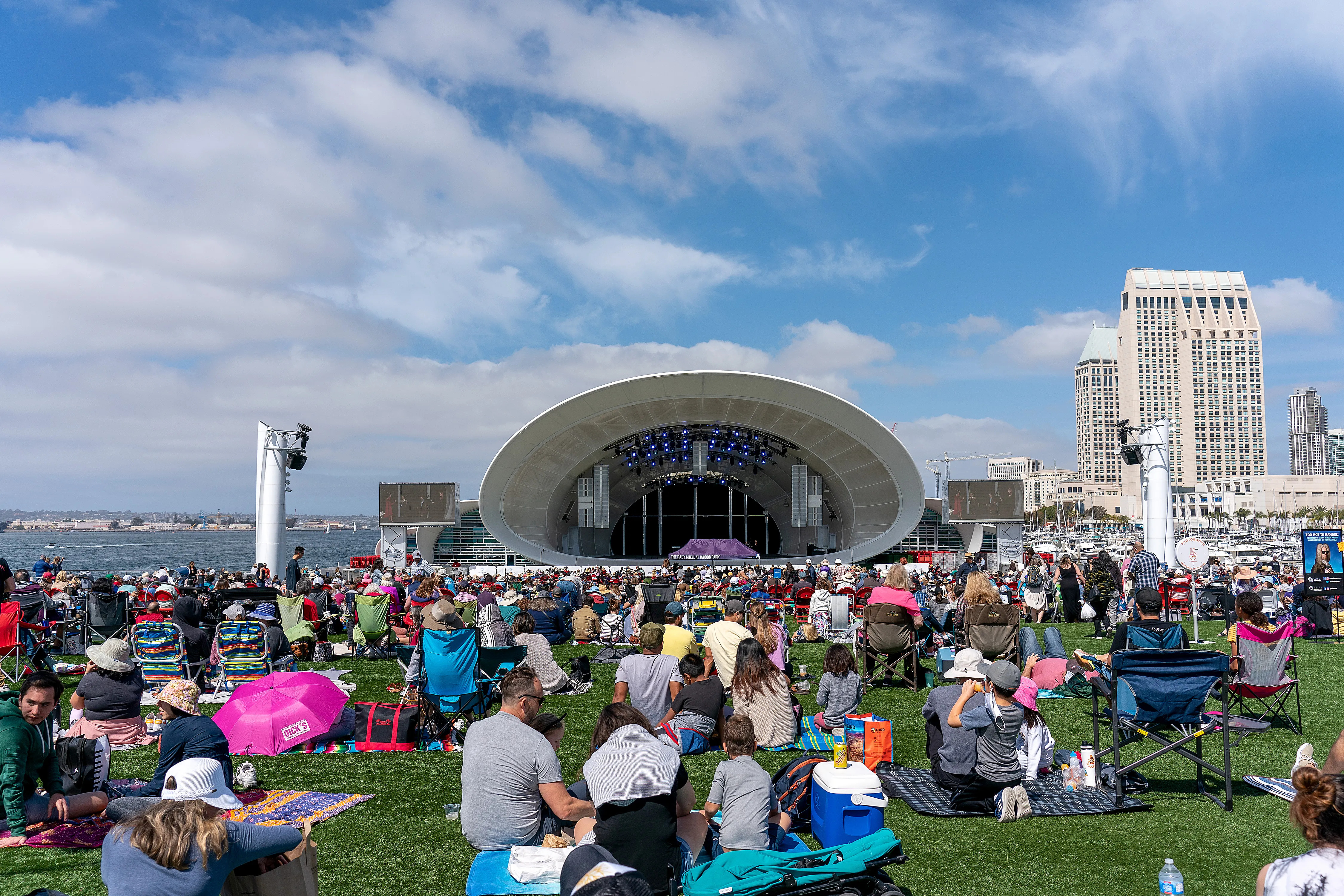
The adventure in LEGO Galaxy includes more ways to explore the wonders of space: two additional themed rides, the Junior Astronaut Training Zone and U.F.O., the Ultimate Food Outlet eatery. And if you haven’t visited in a bit, take time to check out the park’s amazing re-creation of San Diego as part of Miniland USA, with detailed small-scale versions of such San Diego icons as Petco Park and the Rady Shell at Jacobs Park.

SeaWorld San Diego

SeaWorld unveiled plans for a reimagined Shark Encounter experience, debuting in Spring 2026. The experience will transport guests into a breathtaking aquatic environment, inviting them to explore the ocean like never before and discover the remarkable beauty and power of sharks. The cutting-edge exhibit will showcase 11 species of sharks from around the world — many of which are vulnerable or threatened — and include multimedia that will educate guests about sharks’ incredible diversity and their vital role in the ocean. 

A new, exclusive VIP Shark Tour offers a behind-the-scenes look at how the park’s zoological specialists feed and care for the sharks, and access to a brand-new walkway above the shark habitat provides a fascinating view of the animals. In celebration of the announcement, SeaWorld is launching its 2026 Fun Card, which offers unlimited visits through all of 2026. 

Navy SEAL Museum

Honoring the region’s proud military history, San Diego is home to the West Coast’s only Navy SEAL Museum, sure to become one of San Diego’s biggest draws for 2026. Visitors can get a behind-the-scenes look at the mental and physical discipline required to join this elite force, immerse themselves in exhibits that delve into key SEAL missions and experience a high-tech virtual reality rescue mission — a program developed by a former Navy SEAL.

Dining in the Spotlight

San Diego’s vibrant food scene ranges from Michelin-starred restaurants to world-class neighborhood taco joints and everything in between. Here are some of the great new dining options that recently opened or are coming in 2026:

Lilo

One of San Diego county’s newest fine dining restaurants, Lilo, has already joined the Michelin ranks of Jeune et Jolie, Valle, Soichi and Addison, all of which retained their stars in 2025.

Fleurette

Chef Travis Swikard of the Michelin Bib Gourmand restaurant Callie opened his newest culinary project, Fleurette, in La Jolla in December.

Dora

Dora, the newest culinary concept from the team behind the award-winning Cori Pastificio Trattoria, opened in fall 2025 near the La Jolla Playhouse.

Lucien

Lucien is a new addition to the burgeoning La Jolla culinary scene, helmed by Michelin-seasoned Chef Elijah Arizmendi, offering a guided 12-plus course dinner that is a love letter to California.

Bonne Vie Brasserie & Bar

The Westgate Hotel located in Downtown, debuted Bonne Vie Brasserie & Bar, its signature restaurant celebrating the cuisine of Northern France with weekend brunch, breakfast, lunch and dinner, and a generous happy hour that is available Monday through Friday.

Tacos El Franc

For casual dining, Tacos El Franc, the Tijuana-based taqueria that was recognized in the Michelin Guide, opened its second stateside location in the Gaslamp Quarter.

PopUp Bagels

PopUp Bagels made its West Coast debut in La Jolla and has been drawing crowds for its New York City-style bagels.

Halal Guys

Halal Guys opened its first San Diego location in Hillcrest.

The Admiral

In late 2026, Liberty Station is welcoming an exciting new hospitality concept, The Admiral, which is helmed by acclaimed restaurateur Ryan Thornsen of the landmark fine dining restaurant Mister A’s. The project will bring new life into four historic WWII-era buildings in the heart of Liberty Station, transforming the buildings into a dynamic blend of dining, entertainment and heritage.

À L'ouest

Brad Wise, the chef behind Trust and Fort Oak (both included in the Michelin Guide) is reviving a prominent corner in North Park with À L'ouest — his take on a French brasserie — that will include wood-smoked dishes and classics.

Corallino

In Point Loma, the owners of Italian restaurants Cesarina and Elvira are opening Corallino, a neighborhood restaurant with freshly made pasta and Roman specialties.

The Boatyard

Also in Point Loma, The Boatyard will transform a two-story landmark restaurant into a nautical-themed steakhouse and speakeasy.

Sugarfish

Diners can look forward to trying the sushi from Sugarfish, the Los Angeles-based chain from Chef Kazunori Nozawa that’s famous for affordable omakase and colorful takeout boxes complete with illustrated instructions, when it opens in Little Italy this spring.

Teleferic Barcelona

Coming to Westfield UTC in the La Jolla area are Teleferic Barcelona, the Spanish restaurant chain, and Joey, an upscale-yet-casual dining concept from Canada.

Sports Venue Delights

When it comes to amazing local food, it’s game on at San Diego’s sporting venues. You can find a range of great local bites and brews at the San Diego Padres’ Petco Park and at Snapdragon Stadium (also home to the San Diego State Aztecs as well as San Diego FC and San Diego Wave soccer) — and now at the new Frontwave Arena in Oceanside, whose food purveyors include Seaside Market and Gelati & Piccati.


Sports Sensations


NASCAR Revs Up

San Diego The first-ever NASCAR San Diego Weekend will be held in June 2026 at Naval Base Coronado, celebrating the 250th anniversary of the U.S. Navy. NASCAR San Diego will be three days of races headlined by the stars of the NASCAR Cup Series, along with the NASCAR Xfinity Series and NASCAR CRAFTSMAN Truck Series. In addition to being San Diego’s first NASCAR event, it will also be the first race to take place on a military base.


Soccer Sweeps the Region

San Diego’s first Major League Soccer team, San Diego FC, arrived in Spring 2025 after much anticipation and finished their record-breaking inaugural season first in the Western Conference. The club, partly owned by the Sycuan Band of the Kumeyaay Nation, kicks off the 2026 season in Round 1 of the Concacaf Champions Cup in Mexico City, then commences its first home game at Snapdragon Stadium against CF Montreal on February 21. 

Another groundbreaking team, the San Diego Wave, launches into its fifth season of great National Women’s Soccer League action at the Coachella Valley Invitational — the largest preseason event in North American professional soccer history — before commencing their regular season at Snapdragon Stadium.

And while San Diego is not a host city for the FIFA World Cup 2026, San Diego FC is celebrating the tournament with official watch parties and events at Belmont Park from June 11 - July 19. 

College Sports on the Rise 

College sports are also in the spotlight in San Diego. The city has hosted the Holiday Bowl every December since its inception, but this year’s 46th Annual Trust & Will Holiday Bowl takes place on January 2 at Snapdragon Stadium, featuring the Arizona Wildcats (Big 12) and the Southern Methodist University Mustangs (ACC). 

In basketball, San Diego will host a major national tournament in March 2026. The NCAA Division I Men's Basketball Championship (better known as March Madness) will hold its First and Second Rounds at Viejas Arena on the San Diego State University campus. 

The holiday season will also be bustling with top-tier college basketball. The Rady Children's Invitational, produced by Sports San Diego, will once again field four elite teams from around the country on Thanksgiving Day, November 26, 2026. The two-day tournament will be held at the Jenny Craig Pavilion at the University of San Diego, featuring UCLA (Big Ten), Georgetown (Big East), Texas (SEC) and Saint Mary's (WCC). For every ticket sold, $5 will be donated to Rady Children’s Hospital-San Diego. 

Rock N Roll San Diego Still Running Strong 

Nearly 30 years after the original Rock 'n' Roll Marathon debuted here, San Diego will once again welcome the Rock 'n' Roll Running Series — now a global happening with a dozen events around the country and world. The races here (taking place May 30 to May 31) include a marathon, half-marathon and 5K. And it's hard to top San Diego as a host city: This region is a paradise for runners, with numerous road and trail races unfolding throughout the year.


New and Renewed Hotels and Transportation

San Diego International Airport

There’s a lot of buzz at San Diego International Airport, as the first phase of the new Terminal project 1 opened last fall. Travelers are welcomed by a completely revamped terminal to the downtown-close airport, with 19 new gates, public art installations featuring works by local artists and an outdoor dining area with views of downtown. There’s also a wealth of great new dining options including local favorites Kettner ExchangePuesto and Cutwater Restaurant & Bar.

Le Meridien Pinnacle San Diego

Le Méridien Pinnacle San Diego will soon be the hottest address in San Diego’s Little Italy neighborhood when it opens this summer. The sleek 39-story hotel will offer 231 rooms and suites, a rooftop pool and bar, outdoor fitness center and modern European-style decor. Situated in one of San Diego’s most walkable neighborhoods, hotel guests will have seamless access to the waterfront and Broadway Pier, Santa Fe Depot train station and Little Italy’s bustling restaurants and shops.

Manchester Grand Hyatt

The Manchester Grand Hyatt, a landmark dual-tower hotel that graces San Diego’s waterfront, is undergoing a complete refresh and is set to debut its renovated spaces in spring and summer of 2026. Guests can expect updated guest rooms, the transformation of Sally’s Waterfront Dining into an open-air destination offering clear views of the bay, an enhanced pool deck and a new look for the Top of the Hyatt, the hotel’s signature lounge on the 40th floor that treats guests to sweeping views of the marina, downtown skyline and Coronado Bridge.

Hotel del Coronado

If it’s been awhile since you’ve been to San Diego, head to Coronado Island to see the completed restoration of the Hotel del Coronado, the iconic red-roofed Victorian-era resort. The property recently underwent a multiyear $550 million renovation that preserved the historic architecture and refreshed the guest rooms, courtyard and veranda, pool deck and the debut of the Sun Deck Bar & Grill, an expansive lounge with front-row views of Coronado Beach. Also new to the hotel is Nobu Del Coronado, serving Chef Nobu Matsuhisa’s renowned dishes in a stunning seaside locale.

Arts and Culture at Center Stage

Top Theater Premieres

San Diego has gained a stellar reputation as one of America’s top theater towns, birthing numerous Broadway-bound productions. And 2026 is shaping up to be another banner year for big shows: The Old Globe Theatre in Balboa Park is staging three world premieres, including Henrik Ibsen’s “Hedda Gabler” starring Katie Holmes, while La Jolla Playhouse’s season features the world premieres of the musicals “The Family Album” and “GRIM,” and the play “A Black-Billed Cuckoo,” alongside the West Coast premieres of “Purpose” and “The Monsters.”

The Joan

And speaking of big premieres: The long-awaited Joan & Irwin Jacobs Performing Arts Center has opened at ARTS Center Liberty Station in Point Loma. Affectionately known as “The Joan” in memory of Joan Jacobs, a beloved arts patron and philanthropist (alongside her husband, Irwin), the center serves as a permanent home for Cygnet Theatre. Upcoming shows include the uplifting musicals “Somewhere Over the Border” and “The Sponge Bob Musical.”

San Diego Symphony

The San Diego Symphony rechristened its indoor home to complement its hugely successful outdoor Rady Shell: the Jacobs Music Center, which was beautifully restored as part of a four-year, $125 million renovation project.

Banksy in Del Mar

From January through April, the Del Mar Fairgrounds will host the exciting San Diego debut of “The Art of Banksy: Without Limits,” an immersive exhibit celebrating the elusive street artist’s famous works. “Without Limits” has toured throughout Europe, Asia and Australia, and showcases a mix of original art by Banksy from a private collection, as well replicas, hologram installations, an infinity room and murals. Tickets must be booked in advance and are timed for one hour.

WOW Festival

San Diego takes its arts acumen outside in 2026 with awesome outdoor festivals and exhibits in the spring. La Jolla Playhouse’s WOW (Without Walls) Festival returns to its home base of UC San Diego in April with 20-plus boundary-busting arts experiences. The 46th Annual Mission Fed Artwalk in April will turn the streets of Little Italy into a multi-block festival showcasing the works of more than 250 artists from across the U.S. and Mexico. In July and August, nearly 200 artists will gather for Artwalk Liberty Station in Point Loma, and the weekend kicks off with a preview party complete with live music.

Shopping

New at Westfield UTC

The new luxury wing of Westfield UTC is set to open in early 2026, bringing shoppers 70,000 square feet of innovative, sustainable design along with iconic luxury fashion brands, including Chanel, Carolina Herrera and Tom Ford — the San Diego location will be one of a handful of Ford’s freestanding boutiques in the U.S. — plus an expanded Restoration Hardware and more.

Milestones and Encores

La Valencia Hotel

The La Valencia Hotel, La Jolla’s iconic seaside retreat known as “The Pink Lady,” celebrates its centennial this coming year (and is looking fabulous). In gearing up for its 100th birthday, the resort underwent a series of renovations that included a refresh of the guest rooms and public spaces. Last fall it debuted a new wellness oasis, The Spa at La Valencia, with signature treatments like the “Pink Lady Indulgence” that incorporates a rose gold radiance facial complete with rose quartz crystal and Damask rose extract.

The landmark Whaling Bar, known for well-crafted cocktails and inventive Cesar “Twinkie” salad, also got a new look and menu, while preserving the original murals and paintings by artist Wing Howard that date back to the 1940s. All throughout the year, the hotel plans to host numerous celebrations.

San Diego Museum of Art

In 2026, the San Diego Museum of Art will be hosting its Centennial Celebration. The celebration kicks off in January with a special exhibition, SDMA 100 Years. On February 28, the museum’s official birthday, visitors can attend the Birthday Fest, complete with free admission, live music and dance performances, a Cake Party for an additional fee, and more.

Pechanga Arena

Pechanga Arena, San Diego’s iconic event and concert venue that was immortalized in Cameron Crowe’s film “Almost Famous,” turns 60 this year. The indoor arena is home to both the San Diego Gulls hockey and San Diego Seals lacrosse teams in winter and spring, and hosts an impressive lineup of performances and concerts throughout the year.

On the calendar for 2026 is “Disney on Ice: Let’s Dance” in January, the Harlem Globetrotters — who are celebrating their centennial this year— in February, Nine Inch Nails in March, Rosalía’s “Lux” Tour in July, and Third Day’s 30th anniversary tour in April. Visitors can also look forward to a recap party in November as well as commemorative celebrations throughout the year.

Music, Art and Culinary Festivals

Music Fests

The Wonderfront Music & Arts Festival returns in fall 2026 to enchant music lovers and light up the Embarcadero. The weekend will feature an eclectic mix of artists across all genres. CRSSD brings a weekend of electronic, house and techno music to Little Italy’s waterfront park in March and September — the spring fete’s lineup includes international artists like Dom Dolla and Cirez D. The San Diego Symphony’s stunning Rady Shell at Jacobs Park brings a full summer season of waterfront entertainment under the stars, and in October, Mission Bayfest transforms Mariner’s Point in Mission Bay into a three-day reggae music festival.

Food, Wine and More

Combine San Diego’s great outdoors with the city’s culinary pizazz and you have the ideal recipe for awesome foodie festivals. Fall brings both the Del Mar Wine + Food Festival and the San Diego Food + Wine Festival, as well as San Diego Beer Week for fans of the region’s famous craft brews.

Comic-Con and TwitchCon

Come summer and fall, San Diego will once again host a pair of major pop-culture events. First comes Comic-Con International: San Diego, the globally renowned celebration of comics, Hollywood and much (much!) more. Then, November brings TwitchCon, focused on the wide world of live-streaming and gaming. Both of these spectacular events unfold at the San Diego Convention Center.

Kids Free San Diego

If you’re visiting San Diego with kids, October totally rocks – and not just because the month is topped off with the sweet satisfactions of trick-or-treating. The month brings balmy weather, quiet beaches and the much-loved Kids Free San Diego program. The month-long promotion will be celebrating its 15 year anniversary, and lets young visitors eat, play and stay for free when they visit many of San Diego’s amazing attractions, hotels, restaurants and more with their families.'


Beaches and Outdoor Bliss


Take a Scenic Drive

San Diego is a big place, and one great way to embrace it is by taking the 59-mile Scenic Drive that loops its way through the city's charming neighborhoods and byways, offering views of everything from the stunning Pacific coastline to the sparkle of Downtown's skyline. The tour makes for the perfect sampler of the region’s beauty and diversity. Or, you can opt to head east to San Diego’s inland valleys and mountain communities and then head back west to see the Beach, Mountains and Desert in one day.


Hit the Beach

And of course, San Diego just wouldn't be San Diego without its amazing beaches, offering year-round surf, sun and fun. While there are always new things to do and see in this ever-dynamic region, you can always count on the city’s 70 miles of coastline — from its beaches to its boardwalks to its bays — to make a visit he memory books.


I hope this list points the way to exploring our beautiful city, San Diego. If we missed anything, make sure to montion it in the comments below. We'll make sure to cover it in a future post.

We are always available to assist you with your journey in San Diego...Hennin & The DHC Group.

Posted in Market News