Area Real Estate News & Market Trends

You’ll find our blog to be a wealth of information, covering everything from local market statistics and home values to community happenings. That’s because we care about the community and want to help you find your place in it. Please reach out if you have any questions at all. We’d love to talk with you!

Jan. 27, 2026

Should you buy a house? 8 signs you’re ready.

Discover key financial and lifestyle signs that indicate you’re ready for homeownership

8 signs you’re ready to buy a house

Do you frequently find yourself wondering whether to keep renting or buy a home, or asking yourself, “Am I ready to buy a house?” Here are eight signs that you’re ready to make the switch from renter to homeowner.

1. Your rent is rising

Rent prices can be every bit as prohibitively expensive as mortgage payments. Data from Redfin shows that in June 2025, the national average rent was $1,642 — down 0.48 percent from the year before.

Rising rent makes it harder to budget for monthly housing costs and save for other financial goals. When paying rent begins to feel like a bad investment and you want to build equity for the future, it’s time to think about a mortgage, says Bill Golden, a real estate agent with Keller Williams Realty Intown Atlanta. “If you’ve seen your rent escalate significantly and you feel trapped, the balance may be tipping toward buying,” he says. “Your monthly outlay could be less on a purchase.”

2. Your credit score is solid

Some renters can’t make the leap to homeownership because they don’t qualify for a mortgage. Low credit scores are a common reason: A history of late payments or too much debt will hurt your score. One sign that you’re ready to buy a home is having a healthy credit score, says Bruce McClary, a senior vice president at the National Foundation for Credit Counseling in Washington, D.C.

Although borrowers with a credit score as low as 500 can qualify for some home loans, they will be required to make bigger down payments and pay higher rates. A higher credit score gets you better interest rates and loan terms.

To check your score, get a free copy of your credit report and examine it carefully. Look at what’s bringing down your score and focus on improving in those areas, as well as paying down your debt in general. “Establishing a credit history or recovering from a credit setback can take time, but the goal of homeownership is still realistic under those circumstances,” McClary says.

3. Your debt is manageable

Another thing lenders look at when screening mortgage applicants is their debt-to-income ratio, or DTI. This key metric evaluates your monthly debts against your monthly income. The higher your DTI, the more risky you appear to a lender — a lower DTI will also allow more wiggle room in your budget to put money aside for home repairs and other unexpected expenses. Use Bankrate’s DTI calculator to figure out yours.

“Keeping credit card balances low and debt under control is beneficial in many ways,” McClary says. “Keeping your balances at or below 30 percent of the available credit limit has a positive influence on the credit score.” If your credit utilization ratio is above that threshold, you may want to improve it before applying for a mortgage. You can do that by paying down your bills and keeping long-standing credit cards open — even after they’re paid off.

Consider the 28/36 rule

The 28/36 rule is a commonly used guideline that says you should spend no more than 28 percent of your gross monthly income on housing costs, and no more than 36 percent on all your combined debt. This can help ensure you’re not overextending yourself.

4. You can afford a down payment and closing costs

“First-time homebuyers don’t have proceeds from another home to help fund a down payment. It’s one of the main reasons why the down payment is the biggest hurdle to homeownership,” says Rob Chrane, CEO of Down Payment Resource, which finds programs that help people buy homes.

Down payment requirements are a percentage of the overall home price, and they can vary greatly depending on the type of home loan you get. For conventional loans, 20 percent down is usually required to avoid paying private mortgage insurance. (Some mortgages require much less down, but keep in mind that the less you pay upfront, the more you’re borrowing — and so the more interest you’ll pay over time.)

For a $400,000 home, which is pretty close to the national median price, 20 percent comes out to $80,000. If that amount sounds scary, there are many grants and programs to help homebuyers with down payments. “There is a wide range of programs for homebuyers today — we track more than 2,500 homeownership programs across the country administered by federal, state, county or local government agencies, nonprofits and employers,” says Chrane.

Buyers should also be ready for closing costs, which typically run from 2 percent to 5 percent of a property’s sale price. The good news is that many of these costs are negotiable. “Because buyers are putting so much of what they have into the down payment, we usually try to get the seller to pay some, if not all, of the closing costs,” Golden says.

5. You have enough set aside for maintenance

When a pipe bursts or the air conditioner goes out in a rental unit, you don’t have to worry about paying for it: That’s the landlord’s responsibility. The same goes for property taxes and routine maintenance expenses. When you’re the owner, though, all those costs are your responsibility — so you need to have enough extra money to handle the added expenses.

A rule of thumb is to set aside at least 1 percent of your home’s purchase price every year to cover maintenance and repairs.

“If you put everything you have into the down payment to buy a house, then you have no money left to do repairs should they come up,” Golden says. “You’re better off spending less on the house so you have some money to make improvements and repairs.” And of course, you need homeowners insurance coverage as well, which can be quite pricey in high-risk areas.

6. You’ve gone through a major life change

Many renters decide to purchase a home after a major life event, such as getting married, says Henry Yoshida, a certified financial planner and senior vice president at Retired.com. A growing family and a new job are other common catalysts for people to buy a home.

“The four major cities in my home state, Texas, are simultaneously on top 10 lists for raising a family and retiring, so I see this firsthand,” Yoshida says. “My own neighbors on either side are retirees from California and a young family who relocated from the Northeast for a job.”

While it’s perfectly fine to buy a house after a big life event, avoid any major changes — like switching jobs or applying for new credit — while you’re in the midst of closing. Your lender will note any change in your financial situation, and in some cases, a change could cause your mortgage application to be rejected.

7. Your lifestyle is stable

Buying a home involves a lot of upfront costs that can take a few years to recoup, so if you anticipate moving before you can recover those expenses, homeownership might not be the right choice for right now.

A renter who is ready to buy a house should also have job security. A stable job means stable income, which lowers the risk that you might stop making your mortgage payments and default on the loan. This is especially true if a recession is looming, as some economists predict — buying a house during a recession is a dicey proposition if you fear your job may soon be in danger.

“In a perfect world, buyers would buy a home well beneath their means so they aren’t devoting so much of their income to the mortgage and other related costs,” Hamrick says.

8. You know what you want

It’s smart to have a good idea of the neighborhood you want to live in and the type of home you want before you begin your quest. Houses, townhouses, condos, duplexes — there are lots of options out there, and each one has its own considerations. If you buy a condo, for example, you won’t have any yardwork, but you will have monthly homeowners association fees in addition to your mortgage payments.

Determine what you need and what is most important to you. Is it being near a good school or a quick commute to your office? Do you mind navigating stairs or having neighbors living above you? Do you want lots of amenities? If you’ve moved to a new city or state to take a job, it might be a good idea to rent until you’ve familiarized yourself with the area. That way, you are more likely to choose a home and neighborhood you’ll be happy in.

Next steps

Ready to leave renting behind? Before you start looking at homes for sale, shop around for lenders and get preapproved for a mortgage. Preapproval helps you know how much house you can afford and what loan program is best for your situation.

Make sure you can still reach your other financial goals, too. Don’t let a new mortgage prevent you from paying down student loans or credit cards, or from saving for retirement.

It’s also important to partner with an experienced local real estate agent like Hennin Foreman. During the house-hunting phase, The DHC Group will use their expertise in your local market to find potential properties that meet your needs and your budget. Once you decide, Hennin and The DHC Group can help you put together a competitive offer and negotiate with sellers, guiding you all the way through the closing.

Key takeaways

  • If you have a solid credit score, manageable debt load and steady income, you could be in a good position to buy a house.
  • However, you’ll also need to have enough money set aside for a down payment and closing costs.
  • Before buying, make sure you’re ready for other homeownership-related costs, including property taxes, homeowners insurance and maintenance.

Renting gives you the freedom to move when you want, without the responsibilities of homeownership. But at some point, most people yearn for their own home. Buying a house is a good way to start building financial security. As you pay down the mortgage, you build up home equity, which is a valuable financial resource.

Of course, today’s combination of high home prices and high mortgage rates is not exactly working in your favor. Higher rates mean monthly mortgage payments can be a struggle — or even a barrier to homeownership altogether. And there are plenty of other factors to consider, too.

“Housing affordability is a challenge for many prospective homeowners,” says Mark Hamrick, Bankrate’s senior economic analyst. “It pays to shop around for the best mortgage interest rate when the time does come to buy. All too many buyers only focus on the price of the home when there are other factors that also help to determine monthly payments.”


 

Posted in Market News
Jan. 20, 2026

Fed Rate Cuts and Mortgage Rates: According to Experts, Here's What Homebuyers Can Expect in 2026

Fed rate cuts may not mean lower mortgage rates. Learn what experts expect for mortgage interest rates in 2026 and how San Diego buyers should prepare

The Federal Reserve ended the year with its third quarter-point rate cut, offering some relief to borrowers. While this has lowered rates across many lending products, mortgage rates remain relatively high, keeping affordability tight for many buyers. And despite common assumptions, Fed rate cuts do not automatically lead to lower mortgage rates.

That’s because mortgage rates are driven more by long-term factors, especially the 10-year Treasury yield, which reflects investor expectations around inflation, economic growth, and risk. As economists note, the Fed controls short-term rates, but mortgage rates respond to how markets view the broader economy.

Looking ahead to 2026, inflation will remain the most important factor shaping mortgage rates. Continued cooling could help push rates lower, while persistent or rising inflation could keep them elevated. Labor market conditions also matter: slower hiring and moderate wage growth could support lower rates, while a strong job market may keep pressure on borrowing costs.

Experts see several possible paths. If inflation eases and economic growth slows, mortgage rates could drift into the high-5% to low-6% range. More likely, however, rates may stabilize near current levels. There’s also a chance rates could rise again if inflation reaccelerates or economic growth exceeds expectations.

Housing supply challenges will likely persist, as many homeowners remain locked into ultra-low rates from prior years. Even so, buyers are advised not to try to time the market perfectly. If you can afford a home and plan to stay long term, focusing on affordability and personal financial goals may be more important than waiting for rates to fall.

Bottom line: Mortgage rates in 2026 will depend on inflation, economic conditions, and investor expectations. Since rate movements are difficult to predict, buyers may be better off acting when a home and payment fit their budget rather than waiting for uncertain future declines.

While homeownership in San Diego is difficult, making the right decision about buying or selling can feel like a real challenge. Whether you're buying a home, downsizing or upsizing your current home, investing or cashing out all together...if you’re open to having the right agent team put in the work for you, we can get it done.

The DHC Group can help you explore what’s possible and present pain free options that might work for you.

Posted in Market News
Jan. 6, 2026

Your House Didn’t Sell in 2025. What Now?

Sell My San Diego House in 2026When your house doesn’t sell, it does more than disrupt your plans, it hits close to home. You prepared for the next chapter. You told people you were moving. You pictured where you’d go next. And then nothing happened.
It’s normal to feel frustrated, confused, or even a little embarrassed. But here’s the part you have to remember: just because your house didn’t sell the first time, doesn’t mean it won’t sell.

And here’s what most agents won’t tell you. In most cases, the difference typically comes down to the strategy behind the sale, not the house itself. And there’s real data to back that up.

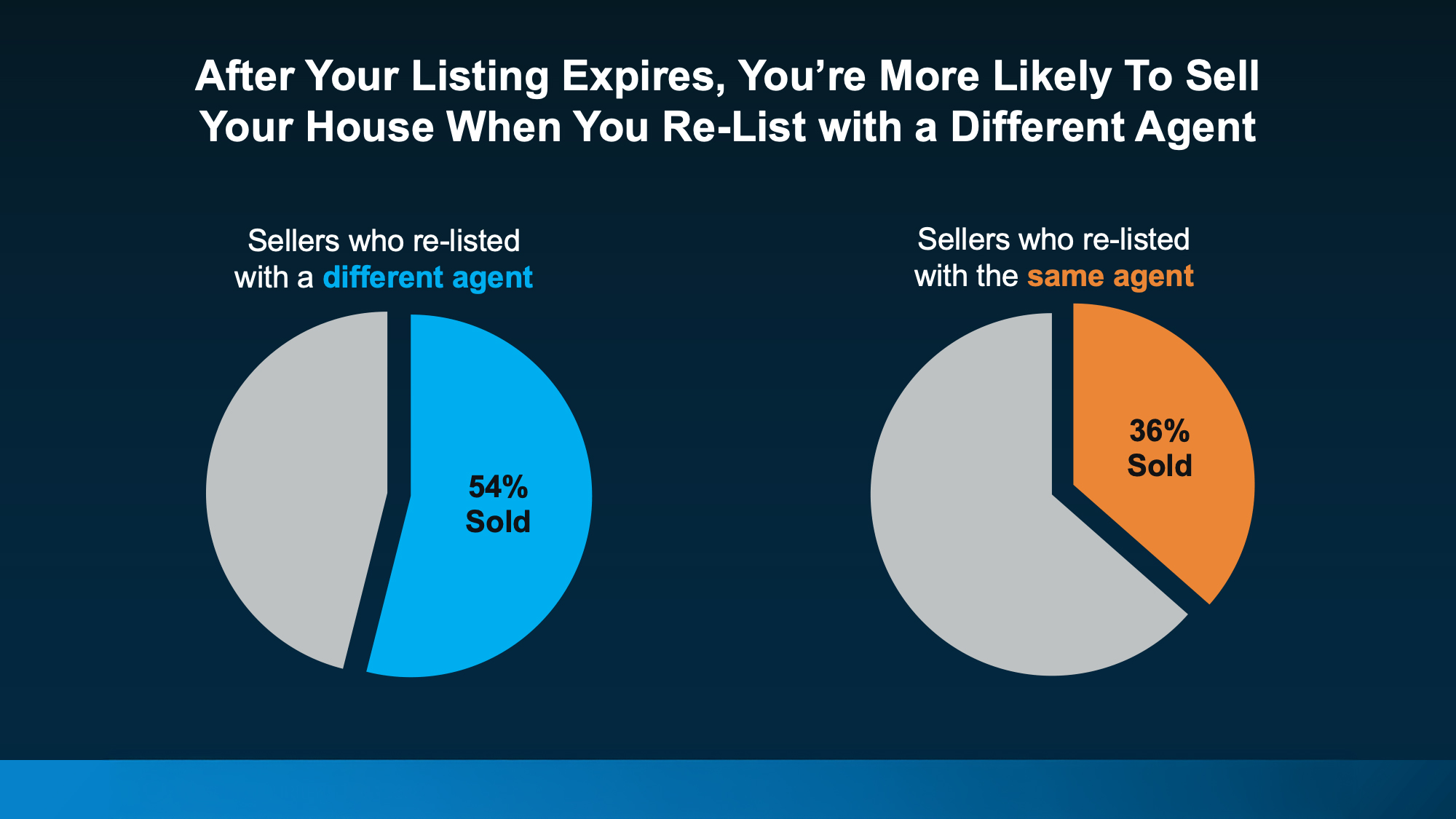
Research from NAR found over half (54%) of homeowners who re-list with a different agent end up selling their house. Re-list with the same agent? That stat drops to only 36%. You deserve better odds than that.

So, if your house didn’t sell, don’t stress. You’re not stuck. You may just need a different professional with a different approach.

Because, at the end of the day, maybe the problem wasn’t the market or your home. It was the strategy. 

Let’s break down what might’ve gone wrong – and how a fresh perspective can help you have a winning plan this time.

1. The Price Was Working Against You

A lot of sellers are aiming a bit too high these days, hoping to match the price their neighbor got during the 2021 frenzy. And that’s not working anymore.

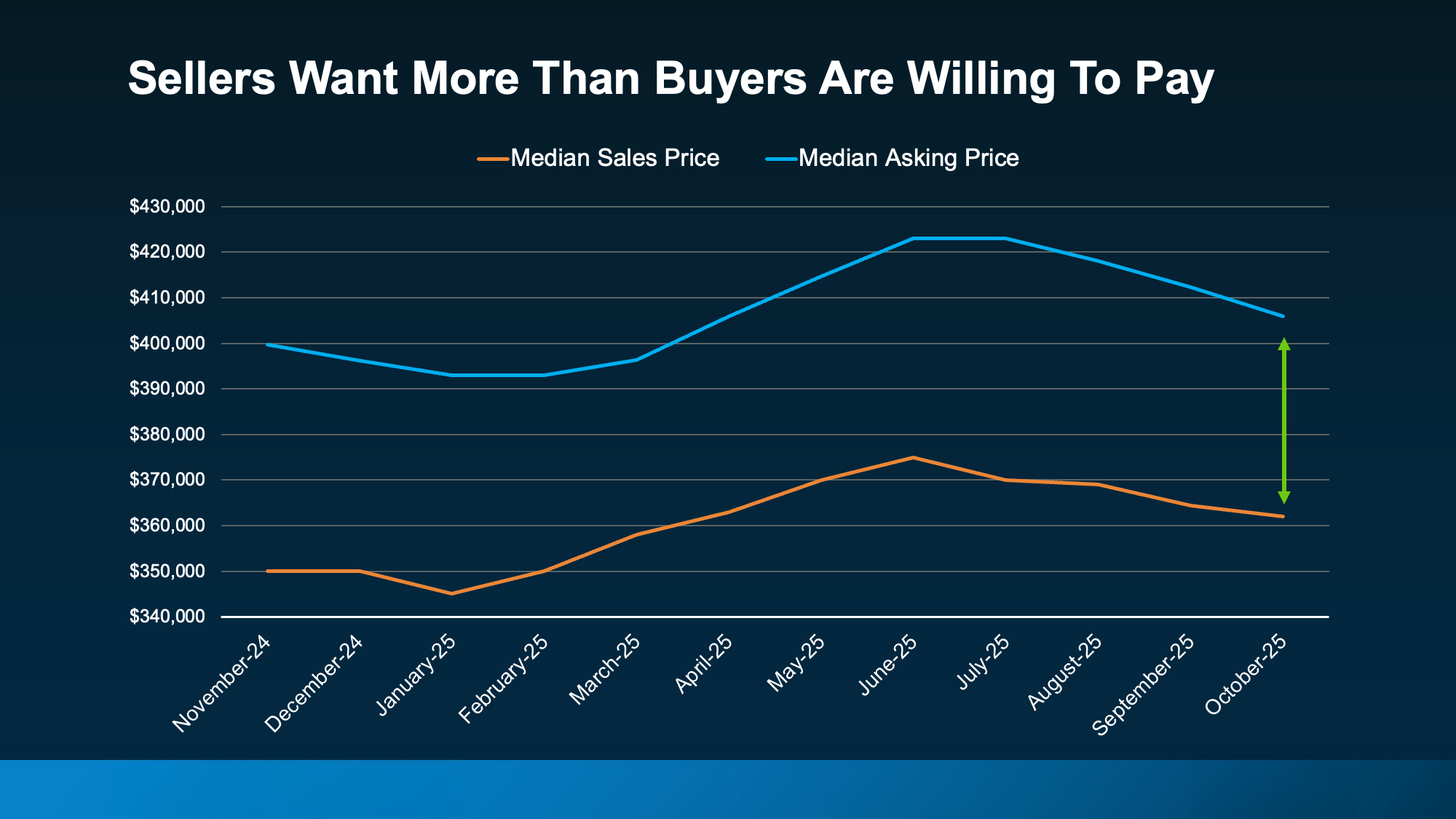
Today’s buyers are being more selective. Even a slightly overpriced home will get overlooked today. And once your listing starts to go stale, it’s hard to regain momentum. The result? A widening gap between seller and buyer expectations (see graph below). That could be what cost you your sale.

The Fix: Get a fresh pricing analysis rooted in what’s happening right now in your neighborhood – not what happened in 2021. Sometimes even a small adjustment can bring the right buyers through the door. HousingWire reports many successful sellers only had to reduce their price by about 4% to get real traction. In the grand scheme of selling a home, it’s really not that much.

2. Your House Didn’t Show Well

You only get one shot at a first impression. If the listing photos didn’t pop, the house wasn’t staged well, or it wasn’t updated, most buyers today will skip over it without ever scheduling a showing. And even if buyers did pass through, small things like scuffed walls, outdated light fixtures, or a wobbly doorknob can turn them away.

The Fix: Let’s walk through your house with fresh eyes to see if there are any areas that may have been sticking points inside and out. Sometimes simple updates (new paint, updated lighting, fresh landscaping, or better listing photos) can completely change how buyers react. 

3. It Didn’t Get the Right Exposure

If your home didn’t sell, chances are it wasn’t getting the visibility it deserved. Generic flyers and a few online photos aren’t enough anymore. Today’s top agents are using highly targeted digital marketing, social media strategies, custom video content, and more to get your listing in front of the right buyers at the right time.

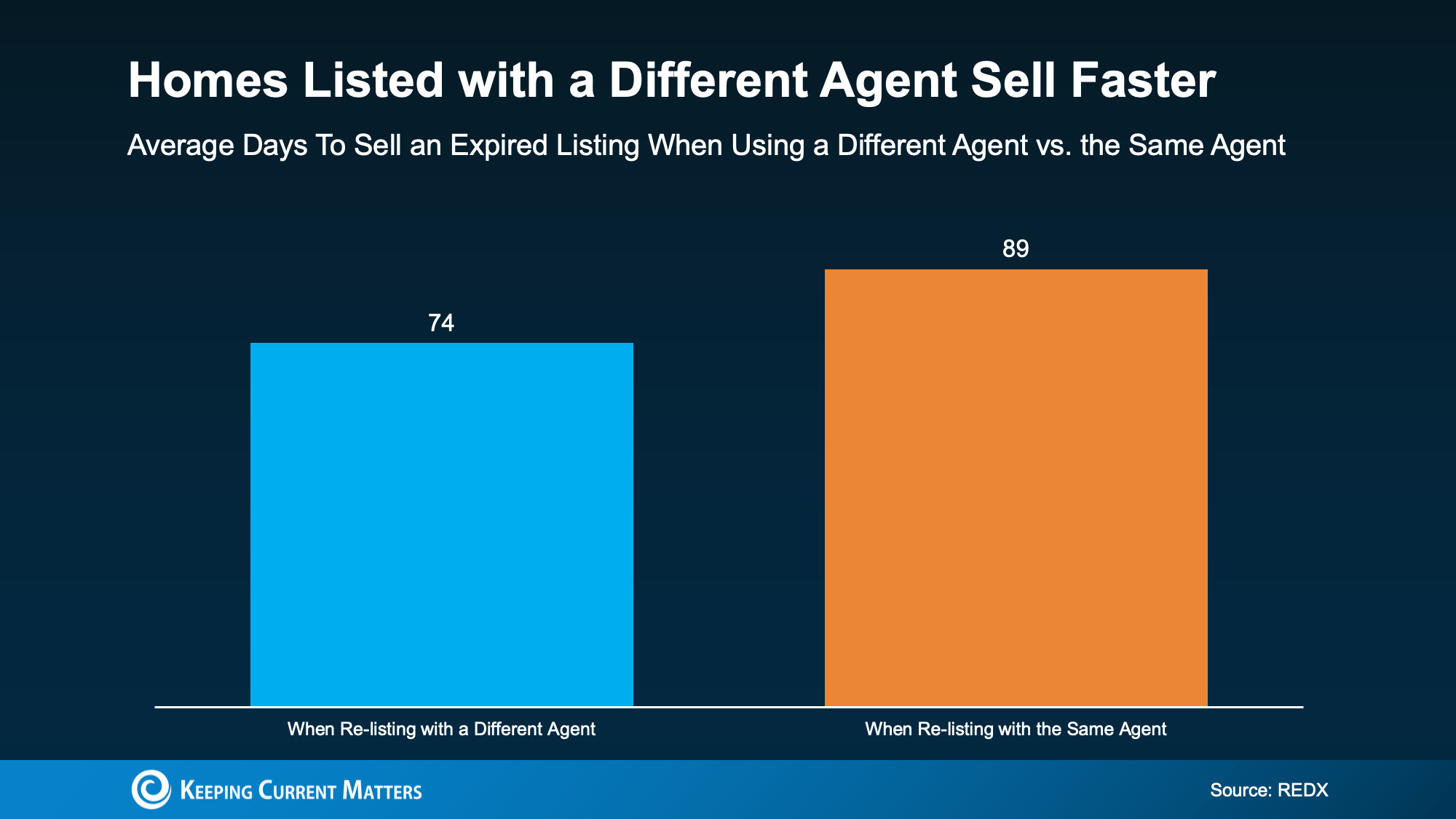
The Fix: We have to do more than just put your house online and hope it sells. With the right pricing, staging, and marketing, your house can still sell. It may even happen faster if you switch agents. Here’s a real-world example (see graph below):

4. You Weren’t Willing To Negotiate

In this market, flexibility matters. If you weren’t open to negotiating on repairs, closing costs, or other concessions, buyers may have walked, especially because many now expect at least some give-and-take. 

The Fix: Be willing to meet buyers where they are. The goal is to get the deal done – and sometimes that means getting creative to cross the finish line. Home values have increased by 48.5% over the last five years, so you likely have enough wiggle room to offer some perks without sacrificing your bottom line.

Bottom Line

If your house didn’t sell and your listing has expired, you’re not stuck. You just need a better plan. And maybe, a better partner like The DHC Group.

Same house. Different strategy. Completely different results. 

If you’re ready to understand what held your sale back (and how to get it right this time) we can give you a different perspective. A few strategic shifts could be all it takes to get your move back on track.

Posted in Market Updates
Dec. 22, 2025

How To Stretch Your Options, Not Your Budget

our dream home may be closer than you think. See how rethinking your must-haves can unlock more affordable options in today’s market.

One of the biggest homebuying advantages you can give yourself today is surprisingly simple: a flexible wish list.

Think of it like this. Your wish list and your budget are the guardrails of your search. And when your budget needs to hold firm, there’s another lever you can pull. That’s seeing if you truly need all of your desired features. Because the truth is, a small compromise could be the difference between feeling stuck and getting the keys to your next home.

The data shows more buyers are using that strategy to offset affordability hurdles in today’s market. A recent study from Cotality found most buyers (70%) ended up compromising on one or more items from their original wish list. But before they started searching, only 33% expected to compromise at all:

Homebuyers small compromises

What changed? They realized something during the search. The things you can’t change matter far more than the things you can update later.

You can:

  • Install hardwood floors
  • Put in those marble countertops
  • Upgrade the bathrooms down the line.

You can’t as easily:

  • Add land
  • Tack on more bedrooms or bathrooms
  • Move the house closer to people you care about

In the end, things like the location, layout, and overall bones matter far more than the cosmetic features you can change later. And that realization is power.

A Simple Step That’ll Open More Doors

So, if you’re hitting a wall in your search or you’re browsing online and just not seeing “it,” here’s an easy exercise that can reset the whole experience. Write down everything you want in a home, then sort it into three buckets:

  • Must-Haves: Your non-negotiables. The things that make daily life workable: the number of bedrooms, the length of your commute, accessibility, safety, or being close to your family or support system.
  • Nice-to-Haves: Features you’d absolutely enjoy but aren’t truly essential. Some examples: a fenced-in backyard, dual closets in the owner’s suite, or a stamped patio.
  • Dream Features: The extras that would truly be over the top. They’re the things you think about when you say “one day, I want to have…” It’s great if you get them, but totally fine if you don’t (for now).

Once you divide your list, you’ll notice something. Your wish list can either limit your options or open them up.

Sometimes you’re treating “nice-to-haves” like “must-haves.” Loosen that up even a little, and suddenly more homes come into range – including homes you may have scrolled past that could actually work for your lifestyle.

Small Flexibility, Big Payoff

Your next home doesn’t need to check every box. It just needs to check the right ones.

Maybe that means considering a house that needs light cosmetic updates. Maybe it means choosing a slightly smaller yard for a better location.

These aren’t sacrifices. They’re worthwhile trade-offs that get you into a home. Just remember, anything cosmetic can be upgraded over time. But getting the right bones, the right layout, the right location? That’s what sets you up for the long run.

An Agent Helps You See the Possibilities

If you’re not sure what to hold firm on and where you can flex, that’s where a The DHC Group can be a game changer. They’ll help you spot the opportunities, walk you through what features you truly shouldn’t budge on, and determine which ones you can add later – when the time is right.

Bottom Line

If you’re ready to find a home that fits both your budget and your life, talk to Hennin and The DHC Group and look at your wish list together. With a local expert on your side, it’s easier to see where a little flexibility can open up a lot more opportunity.

Posted in Market News
Dec. 8, 2025

Is The American Dream Now Defined As “Month to Month”?

San Diego blog that illustrates the city’s worsening affordability crisis and the growing difficulty residents face in securing stable housing or buying a home

Only a small fraction of San Diego residents — about 15% — can afford to buy a typical home today. That reality is reshaping daily life and putting real strain on the community.

I’m 43, have spent 16 years in my career, and hold a master’s degree in journalism. I also earn more than the median income for San Diegans over 25, which is around $57,000. By most measures, I’m doing better than average. Yet owning a home in this city is completely out of reach for me, just as it is for most people. Not long ago, even San Diego’s mayor was renting.

Being single isn’t the reason, either. If I lived with a partner who made the same income as I do, we still wouldn’t qualify for a median-priced home. Only a small slice of families can. Slightly cheaper options exist, like studios or one-bedroom condos, but even those aren’t widely affordable.

People already know this, but the emotional and social effects are huge. For decades, homeownership has been a core part of the “American Dream.” The growing gap between that expectation and the current housing market is shaking long-held beliefs about stability and success.

Some might argue that the solution is simple: move somewhere cheaper. But this overlooks the fact that housing affordability has collapsed across the entire country. According to the National Association of Realtors, 2023 marked the lowest level of affordability since they began keeping track in 1989. This isn’t happening because people lack work ethic. Prices have risen far faster than wages, leaving Americans with fewer and fewer options.

Local leaders often say the key is to build more homes. San Diego has increased home-building permits dramatically in 2023 and 2024 — nearly doubling previous levels. But even with that progress, the city remains far below what it needs to match the growing demand. For decades, the population grew much faster than the housing supply, and two strong years can’t undo that long-term imbalance.

San Diego Growth in Population and Homes


Some critics now claim supply isn’t the problem. Encinitas Mayor Bruce Ehlers, for example, points to recent population dips in the state and county and argues that if fewer people live here, a shortage doesn’t exist. But population stagnation often reflects the housing crisis itself. When homes become too expensive, people leave or avoid starting families. A slight population decline doesn’t prove there’s enough housing — it’s a warning sign that people feel pushed out.

Despite slow progress, adding homes does work. Research from the Pew Charitable Trusts shows that when new housing is built, rent increases slow down — especially for older, more affordable units. Reporting in San Diego has found that neighborhoods permitting the most new housing saw smaller rent jumps than those that built little.

There’s also irony in the fact that Ehlers’ own daughter was able to buy a condo in a new development in Encinitas — the type of project local leaders long resisted. Those homes are still expensive, but they’re far cheaper than the area’s median price. Even so, Ehlers rejects the idea that new housing is helping younger generations gain a foothold.

Many people share that skepticism because the progress feels too slow. If expanding supply is the only strategy elected leaders can offer, public support may fade.

Some officials, like San Diego City Councilmember Sean Elo-Rivera, argue that government needs to step back into housing production more directly — something it did decades ago. He believes large-scale public investment and ownership may be necessary to keep housing from being driven entirely by profit.

Housing is tied to a wider affordability challenge. Wages aren’t keeping up with rising costs in health care, education, utilities, insurance, and daily essentials. Meanwhile, corporate profits continue to climb.

Housing sits at the center of these problems. It shapes financial security, opportunity, and mental well-being. Without a long-term plan to address the housing shortage, elected leaders won’t just be failing the public — they may soon find themselves being the ones asked to “move.”

While homeownership in San Diego still difficult, making the right decision about buying or selling can feel like a real challenge. Whether you're buying a home, downsizing or upsizing your current home, investing or cashing out all together...if you’re open to having the right agent team put in the work for you, we can get it done.

The DHC Group can help you explore what’s possible and present pain free options that might work for you.

Posted in Market Updates
Dec. 1, 2025

The Top 2 Things Homeowners Need To Know Before Selling

Learn the top pricing and timing strategies homeowners must know to sell faster and maximize results in today’s real estate market.

Here’s something you should know before you sell your house. The homeowners who win in today’s market aren’t the ones waiting it out or stepping back. They’re the ones who adapt from the start.

A number of homeowners this year didn’t get the outcome they wanted. But it’s not because something’s wrong with the market. It’s because something wasn’t right with their expectations.

Realtor.com reports 57% more homes have been taken off the market compared to last year. That means they listed… but didn’t sell. But here’s the honest truth. It was mostly because of two things: price and timing.

And if the seller had come in with the right mindset on each, their sale would’ve gone differently. Here are the top 2 things you can learn from those other sellers.

1. Price It Right from Day 1

Let’s start with the most common sticking point: the asking price. Today8 in 10 sellers expect to get their asking price or more. But that confidence doesn’t always line up with reality.

According to SDARonly 1 in 4 (25.3%) sellers are actually getting more than their list price.

And here’s where the mismatch is coming from.

A few years ago, you could set any price and buyers would come running, no matter what the price tag said. Odds are, you’d still sell for over asking. But things are different now.

Buyers have more options than they’ve had in years, so they can afford to be more selective. If your price feels even a little high to them, it’ll get overlooked in a heartbeat.

And for the homeowners who had that happen, some end up pulling their listings instead of making a simple adjustment that could have changed everything. Which is a shame, honestly. Because a small price tweak is usually all it takes to bring buyers in and get the deal done.

According to HousingWire, the average price cut right now is just 4%.

Think about that. Other sellers are listing too high and giving up rather than dropping their price 4%. If they’d just started 4% lower, they may have already sold. So, before you list, talk to your agent about what’s working nearby. They’ll help you find the sweet spot that’s competitive, realistic, and still protecting your bottom line.

And here’s the kicker. If you’ve been in your home for a while, your equity gives you room to set your list price more competitively and still come out way ahead. Unfortunately, those other sellers didn’t seem to realize that.

2. Don’t Rush the Process

Another common misstep: expecting your house to sell in a weekend.

Many sellers right now remember when homes sold in as little as hours – and they expect that to happen today. But in most markets, that’s not the reality anymore.

It takes closer to 60 days to go from listed to sold, which is actually normal (see the gray in the graph below):

It just feels slower because they’re comparing it to the lightning-fast pace of 2020 and 2021.

Think of it like driving 65 mph on the highway, then exiting and going 25. It feels like you’re crawling, but it’s actually the right speed for where you are. That’s what other sellers can’t seem to get over. But you can get ahead of that, by knowing what to expect.

Today’s buyers are more intentional. They’re taking their time, weighing their options, and making thoughtful decisions, which is creating a much healthier housing market.

So, if you’re planning to sell, don’t expect it to happen instantly. And don’t assume your house won’t sell if it doesn’t go under contract in the first weekend.

It’s normal for these things to take time.

If you want to make sure your house sells as quickly as possible, talk to your agent about ways to stand out, whether that’s through staging, photography, or strategic pricing. With the right advice, the right price, and the right prep work, it can still sell quickly.

Bottom Line

If you’re thinking about selling, don’t let the market discourage you, let it guide you. The listings that didn’t sell this year weren’t doomed. They just started with the wrong strategy.

You can still win if you price right, are patient, and work with Hennin and The DHC Group, who knows how to position your home from the start.

Because in today’s market, success isn’t about waiting for conditions to change. It’s about getting your expectations right from day one.

While homeownership in San Diego still difficult, making the right decision about buying or selling can feel like a real challenge. Whether you're buying a home, downsizing or upsizing your current home, investing or cashing out all together...if you’re open to having the right agent team put in the work for you, we can get it done.

The DHC Group can help you explore what’s possible and present pain free options that might work for you.

Posted in Market News
Nov. 10, 2025

2026 Home Prices...What Will Happen? Here's what experts say buyers should know now.

San Diego Home Price Predictions for 2026 — What Experts Expect

Homebuyers finally got some good news late this year when mortgage rates dropped considerably following the Federal Reserve's back-to-back rate cuts in September and October. With the Fed easing its stance on rates, the average 30-year fixed mortgage rate fell into the low-6% range, a notable improvement from the 7%-plus rates homebuyers faced earlier this year.

These lower borrowing costs are helping to reignite interest in the housing market, but the big question now is what happens next. Will improved affordability bring more buyers into the market and push home values higher? Could rising inventory finally give buyers the upper hand? Or will economic uncertainty keep things flat?

As 2026 approaches, the direction of home prices is also up in the air, so we spoke with mortgage and real estate professionals to get their predictions about where home prices could head next year. Here's what they had to say.

What will happen to home prices in 2026? Here's what experts say buyers should know now

Steven Glick, director of mortgage sales at Ziffy, an all-in-one AI-powered real estate investment platform, expects flat to mildly positive home appreciation at somewhere between 0.5% and 2%. 

"That band reflects two things moving in opposite directions: Rates have eased enough to coax demand back, but affordability is still stretched and supply is slowly rebuilding," Glick says.

This outlook signals a return to normalcy after years of extremes. 

"We expect moderate price growth in 2026 — likely below 4% on average across the country.

Karen Mayfield, national head of originations at mortgage-as-a-benefit provider Multiply Mortgage, sees a similar pattern unfolding as lower rates bring buyers and sellers back into the market. However, Mayfield predicts pent-up demand will absorb new home supply.

What could happen in 2026 to cause home prices to rise?

Several conditions could push home prices higher in 2026, experts say. Here's what could cause home prices to rise next year:

  • Mortgage rates drift below 6% and stay there. "Each quarter-point matters for monthly payments and buyer qualifying power," says Glick. "With the Fed already easing and signaling more to come, a gentle slide in mortgage rates would firm demand."
  • The labor market holds steady. "If employment is stable, more people will come off the fence and buy," says Joe Chung, a realtor with Coldwell Banker. When demand improves, prices tend to climb.
  • Construction costs rise. "Tariff-driven cost increases will push new home prices higher, creating a floor for existing home values," Mayfield says.

What could happen in 2026 to cause home prices to fall?

On the flip side, experts say a few factors, including the following, could push home prices down next year: 

  • Mortgage rates climb back up. "An inflation surprise or wider risk premiums would lift the 10-year Treasury and, by extension, 30-year mortgages," Glick says. As affordability worsens, fewer buyers can qualify, weakening demand and putting downward pressure on prices.
  • Housing supply surges unexpectedly. According to Mayfield, a wave of baby boomers downsizing (meaning there are more home sellers) could flood the market with inventory faster than buyers can absorb it.
  • The economy weakens. Rising unemployment or a broader economic downturn would reduce buyer demand and purchasing power.

Chung cautions that the market remains fragile. 

"Small shifts tend to 'freak out' confidence, which can soften values nationally," Chung says.

What could happen in 2026 to cause home prices to stay the same?

The most probable path forward requires the following conditions to hold:

  • Mortgage rates and inventory move in tandem. Glick describes this as a "push-pull balance," where improved affordability adds demand while growing supply adds choice, netting to flat-ish national prices.
  • Economic conditions stay predictable. Mayfield emphasizes the importance of stability. "The key is absence of shocks — no rate spikes, no inventory floods and no major policy changes that dramatically alter buyer or seller behavior," Mayfield says.
  • Regional differences average out. Some Sun Belt and pandemic-boom metros continue digesting their 2021 to 2022 price surges. Meanwhile, supply-constrained Northeastern and Midwestern markets hold firm. "Nationally, that averages out near zero to low-single-digit gains," Glick says.

The bottom line

Experts largely expect home prices to stay stable with modest growth in 2026, but that doesn't mean you should wait to buy. Lock in of the home and payment work for you today.

Rates are already lower than they were earlier in 2025. There's no guarantee 2026 gives you meaningfully lower rates, even a small price rise or more bidding can offset a minor rate dip. NEw economic data or Fed policy changes can shift mortgage rates quickly and without notice.

So if the numbers work for you now, it may be wise to move forward. 

While homeownership in San Diego still difficult, making the right decision about buying or selling can feel like a real challenge. Whether you're buying a home, downsizing or upsizing your current home, investing or cashing out all together...if you’re open to having the right agent team put in the work for you, we can get it done.

The DHC Group can help you explore what’s possible and present pain free options that might work for you.

Posted in Market News
Nov. 4, 2025

How much does a $500,000 mortgage loan cost monthly after the Fed's rate cut?

See how the Fed’s October 2025 rate cut impacts $500,000 mortgage payments and refinance costs in San Diego.

Last week, the Federal Reserve delivered a quarter-point rate cut at the close of its October meeting, lowering the benchmark rate to a range of 3.75% to 4%, with the goal of helping to ease borrowing costs amid an elevated rate climate. That rate cut was the Fed's second consecutive cut of 2025 and followed a similar 25-basis point reduction in September. Despite the central bank's efforts to ease financial conditions, though, questions remain about what this second rate cut of 2025 means for everyday borrowers.

While the Fed doesn't set borrowing rates directly, its moves ripple through financial markets, and those effects are already showing. Home equity borrowing rates, for example, have fallen significantly in recent weeks. For those who want to enter the housing market, though, the Fed's impact on mortgage rates has been uneven. While mortgage rates have come down from their peaks earlier this year, the average 30-year fixed mortgage rate currently sits at 6.17%, a far cry from the sub-3% rates that were commonplace in 2021. 

For buyers weighing whether to jump into the market, understanding the real cost of borrowing in this environment is critical. So, how much would the monthly payments on a $500,000 mortgage loan be if calculated at today's average rates? Below, we'll crunch the payment costs.

For those opting for the traditional 30-year fixed mortgage loan at today's average rate of 6.17%, the monthly principal and interest payment comes to $3,052.62. That's before factoring in property taxes, homeowners' insurance or potential HOA fees — expenses that can easily add hundreds more to the monthly housing bill.

If you're willing to commit to a shorter timeline, a 15-year mortgage loan at today's average rate of 5.41% would bring the monthly payment to $4,061.58. The higher payment reflects the compressed repayment schedule, but it comes with a significant upside: You'll pay dramatically less interest over the life of the loan and build equity much faster.

Now let's compare that to what you would have paid at the start of the year for a $500,000, 30-year mortgage loan when the average rate sat at 7.04%. At that point in mid-January, the monthly payment on the same $500,000 loan would have been about $3,339.96. That means you could save about $290 per month at today's average rates, or rake in more than $3,400 per year in savings.

And now let's consider where rates stood just a year ago. In October 2024, the average 30-year rate hovered around 6.70%, which would have meant a monthly payment of roughly $3,226.39 on the same $500,000 loan. That means today's rate represents a savings of about $170 per month, or about $2,040 annually. 

How much would it cost to refinance a $500,000 mortgage at today's rates?

Homeowners with existing mortgages have their own calculations to make. If you locked in a rate above 7% in the past year or two, refinancing at today's rates could generate substantial savings, though you'll need to weigh those savings against closing costs. Here's what refinancing a $500,000 mortgage would look like at current average rates:

  • 15-year refinance at 5.82%: Your monthly principal and interest payment would be $4,170.82 on a 15-year mortgage refinance at today's rates. This aggressive payoff schedule means higher monthly payments, but you'll eliminate your mortgage debt in half the time and save a fortune in interest over the loan's life. This option makes the most sense for homeowners who can comfortably afford the larger payment and want to build equity quickly.
  • 30-year refinance at 6.49%: The monthly payment on a 30-year mortgage refinance at today's rates would be $3,157.06. This keeps your payment lower and more manageable while still offering savings compared to rates that were common earlier this year. It's a solid middle-ground option for those who want to reduce their monthly obligations without committing to the steeper payments of a 15-year loan.

The bottom line

The Fed's October rate cut has nudged mortgage and refinance rates down slightly, offering a modest but welcome reprieve for borrowers. Still, if you're considering buying or refinancing, it's important to shop around with multiple lenders and compare offers. Even a quarter-point difference in rate can translate to hundreds of dollars in annual savings, so be sure to do your homework and find the best (and most affordable) option for your needs.

While homeownership in San Diego still difficult, making the right decision about buying or selling can feel like a real challenge. Whether you're buying a home, downsizing or upsizing your current home, investing or cashing out all together...if you’re open to having the right agent team put in the work for you, we can get it done.

The DHC Group can help you explore what’s possible and present pain free options that might work for you.


Posted in Market News
Oct. 28, 2025

Will mortgage interest rates drop after this week's Fed meeting?

A blue percent sign next to a small house

AI-generated content may be incorrect.

All eyes will turn toward the Federal Reserve this week as the central bank holds its penultimate meeting of 2025 to determine monetary policy and the future of interest rates.

The bank issued a rate cut in its last meeting in September, its first of the year. That followed a pause for most of 2025 after the central bank cut rates three times in the final months of 2024. As of Monday morning, there was around a 97% chance the Fed would cut rates again in this week's meeting, according to the CME Group's FedWatch tool. While the expectation is that the federal funds rate will be reduced by 25 basis points, any relief here will help borrowers, even indirectly.

And that's especially true for homebuyers, some of whom have been contending with the highest mortgage rates on record in decades over the past few years. And while the Fed doesn't directly dictate what rates lenders offer borrowers, it does go a long way toward impacting them. But will mortgage interest rates actually drop after this week's Fed meeting? Or should borrowers expect them to hold steady a bit longer? Those are the questions we'll examine below.

Will mortgage interest rates drop after this week's Fed meeting?

The answer to this simple question is a bit more nuanced than it may seem on paper, and the timing may not align neatly enough to occur at the conclusion of the meeting on October 29. All one has to do is look at recent mortgage interest rate history to see that mortgage rates drop around the time of a Fed rate cut, but not always right after, and not necessarily by the same amount the Fed reduced rates by.

For example, mortgage interest rates fell to a two-year low in September 2024, a few hours before the Fed actually issued a larger-than-anticipated 50 basis point reduction at the time. And that same dynamic played out almost exactly one year later. When the central bank cut rates by 25 basis points last month, mortgage interest rates had already declined that morning to their lowest level in three years.

So, yes, mortgage interest rates could drop in connection with this week's Fed meeting, but that could occur preemptively, before the cut is issued. That's largely because lenders don't need the Fed to formally act to get ahead of that decision by reducing their offers. Many have already "priced in" this reduction, and that's why some borrowers may not see much of a material difference between the rates they see listed on online marketplaces today … and what they see on those same websites in the days following a cut. 

Keep an eye out, then, for timely (and fleeting) opportunities to lock in a low mortgage interest rate this week. And remember that after the two aforementioned rate drops, there were increases in the rate climate both times. So, if you find a low, affordable rate available this week, even if not quite as ideal as you'd have hoped for, consider locking it in anyway. You never know when these opportunities will present themselves again, and you can always refinance if and when they do.

What's been happening with mortgage interest rates lately?

Overall, rates have been on a slow but noticeable decline for all of 2025. Mortgage rates were averaging just 6.13% in mid-September alongside the Fed's rate-cutting action at the time. They then rose later in the month as data items that would normally influence the rate trajectory were either delayed or paused amid the ongoing government shutdown. But in recent weeks, the average rate on a 30-year mortgage term has again declined. That was 6.34% on October 2, 6.30% on October 9, 6.27% on October 16 and 6.19% on October 23, according to FreddieMac

So rates here are heading in the right, downward direction for borrowers. And they could fall again, not only this week but in the final weeks of the year, too, as projections surrounding another Fed rate cut when the bank meets for the last time in 2025 in December are also elevated.

The bottom line

Mortgage interest rates can potentially drop after this week's Fed meeting, or they could fall right before it, depending on the lender in question and their response to Fed rate activity. Some other lenders, however, may have already taken the step to adjust their offers to reflect a rate cut this week. Be ready to shop around for lenders and rates, however, as offers could be significantly different from lender to lender. And be prepared to lock in a below-average rate if found. As recent history illustrates, these opportunities may not last for very long.

While homeownership in San Diego still difficult, making the right decision about buying or selling can feel like a real challenge. Whether you're buying a home, downsizing or upsizing your current home, investing or cashing out all together...if you’re open to having the right agent team put in the work for you, we can get it done.

The DHC Group can help you explore what’s possible and present pain free options that might work for you.

Posted in Market News
Oct. 13, 2025

California Ends ‘Home Equity Theft’ by Closing the Last Loophole in Property Tax Foreclosures

Learn how California’s AB 418 law closes the loophole in property tax foreclosures, ensuring homeowners keep their home equity after government seizures.

In 2023, the Supreme Court issued a landmark ruling that reaffirmed a basic constitutional principle: When the government seizes property, it cannot keep more than what it is owed.

And yet, until this month, it was still happening to California homeowners who fell behind on their property taxes.

When a homeowner becomes delinquent on their property taxes, local governments place a lien on the property for the amount owed. Before the Supreme Court’s 2023 Tyler v. Hennepin County ruling, that power often went much further. Some governments seized tax-delinquent properties, sold them at auction, and kept all the proceeds—even after the tax debt was paid.

That meant a homeowner who owed only a few thousand dollars in back taxes could lose a property worth hundreds of thousands and receive nothing in return.

After the 2023 ruling, though, most states passed reforms that ensured homeowners received any excess proceeds. But in California, a loophole in the state’s tax code allowed counties to bypass public auctions and instead transfer tax-delinquent properties directly to other government agencies or nonprofit organizations.

While the policy may have been intended to serve the public good, it had devastating consequences. Without an auction, no sale took place and no proceeds were generated, depriving homeowners of all their remaining equity.

California’s fix: What AB 418 does

Earlier this month, Gov. Gavin Newsom signed Assembly Bill 418 into law, closing what the Pacific Legal Foundation called “the last major loophole” in the Golden State’s property tax foreclosure system. 

The new law bans local governments from keeping or transferring homes without providing compensation to the former owner, and ensures that any foreclosure generates a sale, and any surplus funds from a sale are returned to the homeowner.

While Newsom didn’t issue a public signing statement, property rights advocates hailed the reform as a historic victory. 

“For too long, California allowed local governments to strip homeowners of their life savings,” said Jim Manley, state policy director at the Pacific Legal Foundation. “With the signing of AB 418, that injustice ends.”

As many as 3.3% of California mortgage holders were delinquent on their property taxes in 2024, according to a recent Cotality report. That may sound like a small share, but in a state with nearly 40 million residents and a 55% homeownership rate, it represents hundreds of thousands of homeowners at risk of falling into tax foreclosure.

The reform caps off a decade-long campaign by PLF to end home equity theft nationwide. For California homeowners, it’s long-overdue protection from the government collecting more than what it’s owed. And for the remaining states practicing shadow equity theft, it’s a promising example of how to right these wrongs.

This is a "victory not just for California property owners, but for property rights everywhere,” Manley added. “With the signing of AB 418, that injustice ends.”

What it means for homeowners

For California homeowners, AB 418 doesn’t erase the risk of losing property over unpaid taxes—but it ensures they won’t lose everything. Counties can still foreclose if taxes go unpaid, but properties can no longer be transferred without a sale, and any equity remaining after the debt is settled must be returned to the original owner.

For California homeowners, AB 418 restores a basic promise first laid out in the Constitution’s Takings Clause: The government can collect what it’s owed.

Or, in the words of Chief Justice John Roberts: “A taxpayer must render unto Caesar what is Caesar’s, but no more.”

While homeownership in San Diego still difficult, making the right decision about buying or selling can feel like a real challenge. Whether you're buying a home, downsizing or upsizing your current home, investing or cashing out all together...if you’re open to having the right agent team put in the work for you, we can get it done.

The DHC Group can help you explore what’s possible and present pain free options that might work for you.

Posted in Market News