Area Real Estate News & Market Trends

You’ll find our blog to be a wealth of information, covering everything from local market statistics and home values to community happenings. That’s because we care about the community and want to help you find your place in it. Please reach out if you have any questions at all. We’d love to talk with you!

July 20, 2026

Think Nobody's Buying Homes Right Now? Think Again.

Buyer demand is stronger than headlines suggest. See why motivated buyers are still purchasing homes in today's San Diego market.

If you’ve been thinking about selling, you’ve probably seen plenty of headlines suggesting buyers have just about disappeared. But there’s a big difference between a slow market and a stalled one.

Yes, mortgage rates are still higher than most people would like. Homes aren’t selling as fast as they were. And every week seems to bring another headline about buyers sitting on the sidelines. But here’s what you haven’t heard.

Despite everything going on, buyer demand has been remarkably resilient.

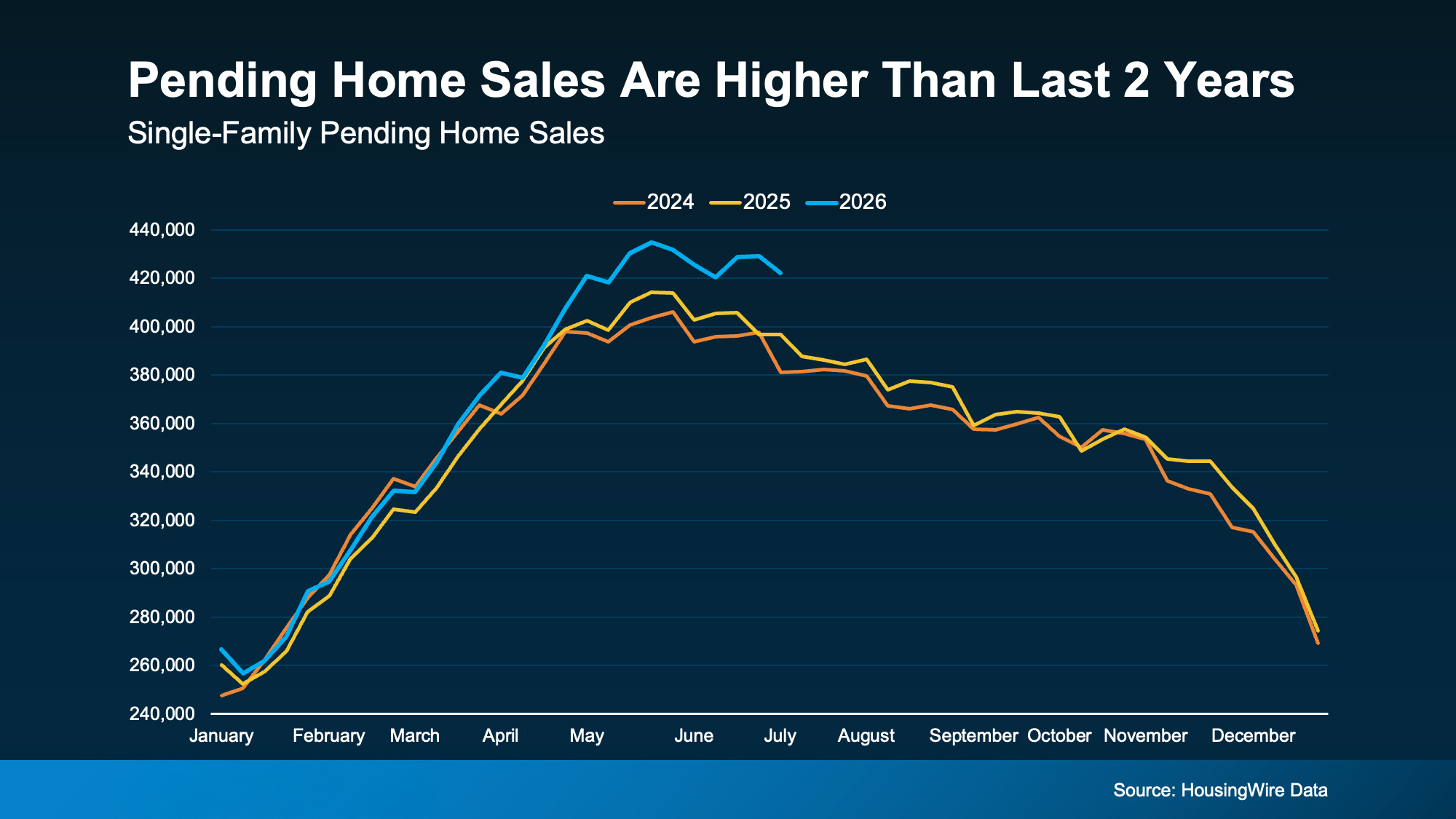
In fact, more sellers are getting to put up the “pending sale” sign now than during the last two years. What’s even more surprising is that they’re doing it at a time of year when activity usually starts to slow down.

And if you’re thinking about selling, that’s a trend worth paying attention to.

Buyers Are More Active Than You Think

One of the best ways to measure buyer demand is by looking at pending home sales. Those are homes that have gone under contract but haven’t closed yet. Think of them as a real-time pulse check on the market and whether buyers are still buying.

HousingWire Data shows more homes are going under contract than at the same time the past 2 years (see graph below):

Buyer demand is stronger than headlines suggest. See why motivated buyers are still purchasing homes in today's San Diego market.

While it may come as a surprise, the numbers speak for themselves. It doesn’t mean buyers are everywhere, but it does mean they’re still active right now. And even if this ebbs and flows a bit in the weeks ahead, right now we’re still ahead of where we’ve been lately. That’s encouraging news if you’re thinking about selling because it tells us something important…

People haven’t stopped buying homes. Serious buyers are still making moves.

And a lot of these people are buying because they decided they can’t keep waiting. Whether it’s a growing family, a new job, retirement, or simply wanting a different home, life keeps moving… even when mortgage rates stay higher than we’d like. As Lawrence Yun, Chief Economist at the National Association of Realtors (NAR), explains:

“A late spring buyer rush—even with mortgage rates not budging—is an indication of pent-up housing demand and consumers’ acceptance of above-6% mortgage rates as the new normal.”

So, if you’ve been worried no one’s buying, this data should give you some confidence. Today’s buyers aren’t just casually browsing open houses on a Sunday afternoon, they’ve spent months waiting for rates to improve and now they realize they can’t wait anymore.

That means they have a purpose and a timeline. And that’s exactly the kind of motivated buyer you want to work with.

What This Means for Your Sale

Does that mean every house will sell instantly? No.

Today’s market is more balanced than it was a few years ago.  So, you can’t just price your house however you want or skip preparing it for the market.

Now buyers have choices, and they’re willing to wait for the right home at the right price. But sellers who understand today’s market (and price and position their homes right) are still finding success. Because the idea that “no one’s buying right now” just isn’t supported by the data.

The buyers are there.

The opportunity is there.

The key is having the right strategy to capture it.

Bottom Line

This year's housing market may be moving slower than many of us hoped. But, buyer demand is more resilient than the headlines suggest.

If you're wondering whether there are enough buyers for your house, send me a message. I can show you what's happening in your local market and build a strategy that helps you take advantage of the momentum that's already here.

Posted in Market Updates
July 15, 2026

Two Big Reasons To Move This Summer

San Diego homebuyers and sellers can benefit from more summer listings, stronger demand, and timely opportunities before fall market slows.

A lot of people who want to move are telling themselves the same thing: “Maybe I’ll just wait until later this year once things calm down.” 

While waiting sounds like a good plan, there’s something worth knowing before you decide. Rates aren’t expected to change much, so if that’s the #1 reason you’re waiting, it may not pay off. And there may be other things you miss out on in the meantime. 

Historically, Summer is one of the strongest seasons of the year for both buyers and sellers. And if you delay your move until Fall or Winter, some of those opportunities may already be fading.

Buyers: Fresh Inventory Is Your Real Summer Advantage

One of the biggest frustrations buyers have faced over the past few years has been a lack of affordable options. Maybe you’ve run into that yourself:

  • You find a house you like, but it’s out of your budget.
  • You find something in your budget, but you don’t like it.
  • Or worse, nothing interesting hits the market for weeks.

Historically, Summer helps with that.

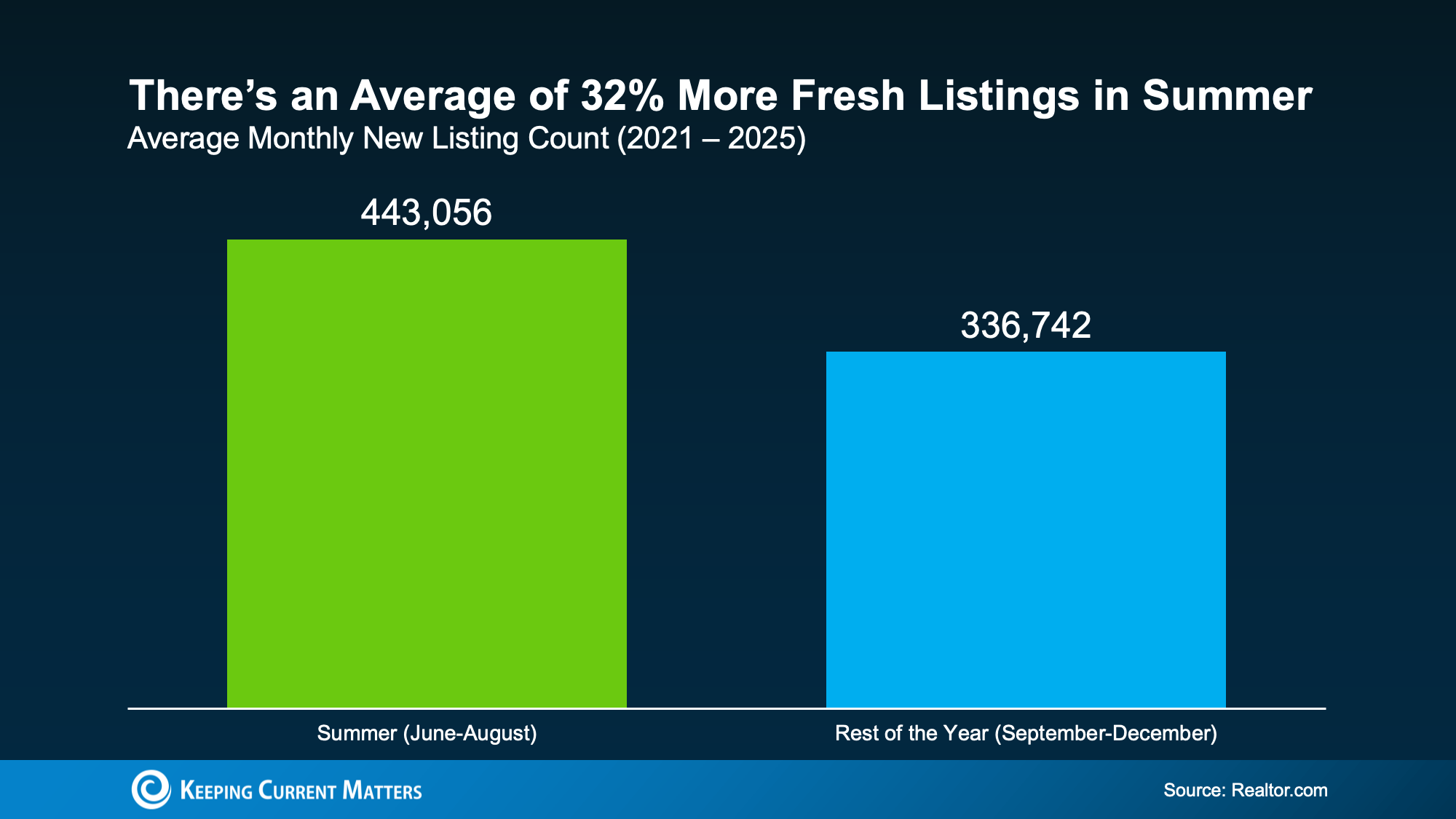
Looking at data from the last few years, Summer months consistently bring more sellers into the market than later in the year. And that gives buyers a real window of fresh choices.

According to Realtor.comany given Summer month typically sees about 32% more fresh options than the average month from September-December.

San Diego homebuyers and sellers can benefit from more summer listings, stronger demand, and timely opportunities before fall market slows.

With more newly listed homes, there’s a better chance of finding one you like where the numbers actually work.

Because all it really takes is one home to completely change your search. And if you’ve got more popping onto the market to choose from, maybe one of those is exactly what you need. 

But keep in mind, this seasonal window isn’t open forever. Fresh inventory tends to slow down once Summer ends.

Many homeowners who planned to sell this year have already listed by then. Families who wanted to move before school starts have often already gotten it done, or at least, set it into motion. So, new listing activity usually cools as we head into Fall and Winter.

Of course, every year is different. But if finding the right home at the right price has been your biggest challenge, waiting until later in the year may not necessarily give you more options. In fact, recent history suggests it may do just the opposite.

Sellers: Homes Usually Sell for More in the Summer

If you’re thinking of selling, you may be considering holding off because you’ve seen headlines about lower asking prices, price cuts, and softer conditions in some markets. But those headlines don’t tell the whole story or convey just how much it varies by area.

Here’s what you really need to know. Even though the market’s becoming more balanced and some pockets are experiencing price declines, that doesn’t mean you’ve missed your chance to sell. 

Seasonality can still work in your favor no matter where you are. And this Summer could still give you the chance to sell for a good price.

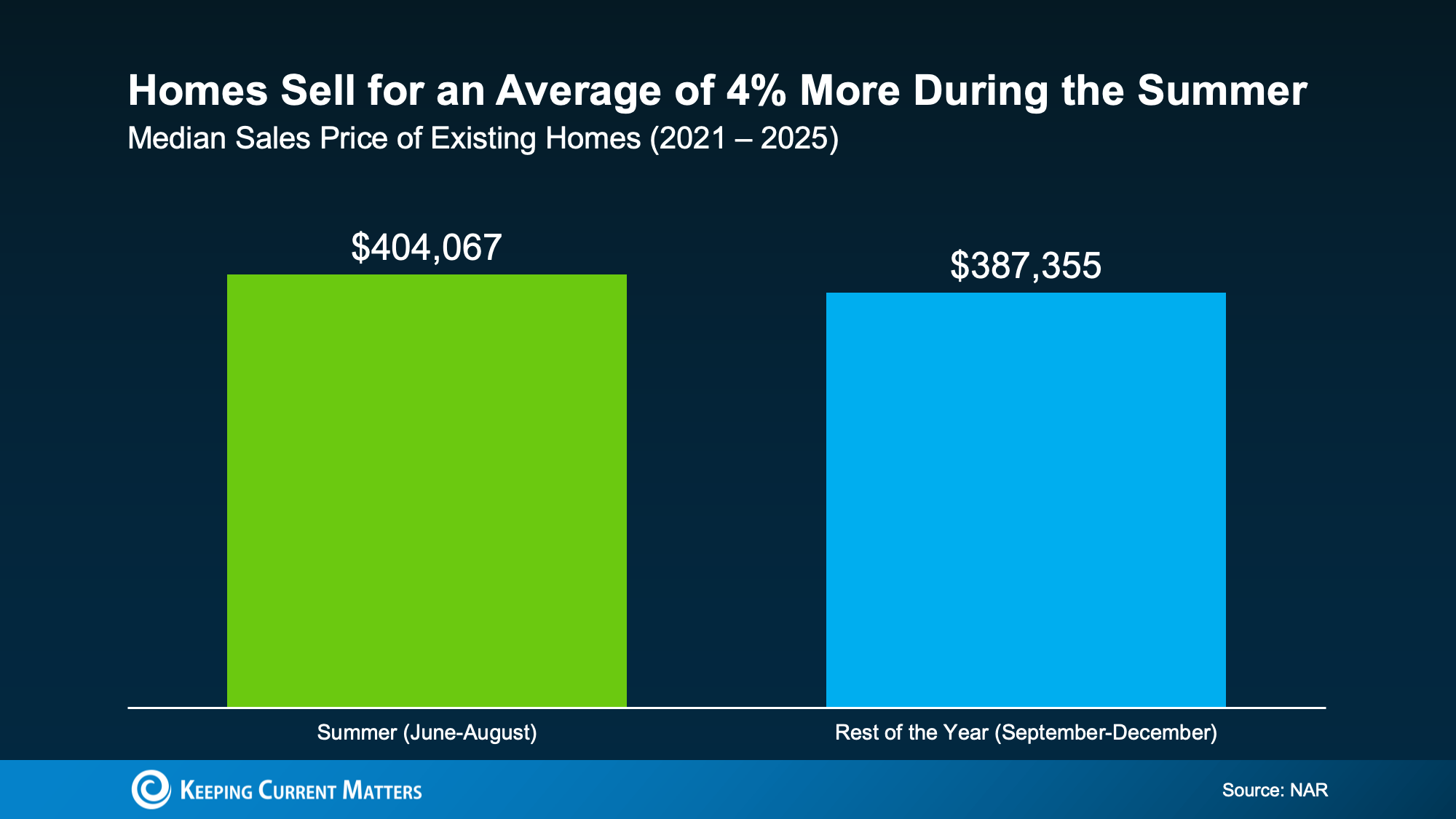
According to the National Association of Realtors (NAR), homes sold during a Summer month usually sell for about 4% more than homes sold during the typical month from September-December:

San Diego homebuyers and sellers can benefit from more summer listings, stronger demand, and timely opportunities before fall market slows.

Why? Summer buyers are usually operating on a set timeframe. They’re trying to move before the next school year or when they have more PTO and warmer weather to tour houses. That urgency can translate into better offers.

Now, that doesn’t mean you should price your house 4% higher this Summer. That would actually be a mistake in today’s market.

It just means if you’re looking to get as much for your house as you reasonably can, a Summer move could be a smarter play than waiting until later this year. 

Because based on typical seasonality, you may get more for your house than you would if you waited until the Fall or Winter (when there are typically fewer buyers active).

And if you’re considering a move anyway, that’s worth factoring in.

Bottom Line

Could waiting until later this year work out? Sure. But it's important to understand what you may gain by moving now too – that way you have the full picture before you decide.

If a 2026 move is on your radar, talk to me about what matters most to you. Depending on your priorities, Summer could be your moment.

Leave a comment or question below. Let’s see if the answer starts a conversation…

Posted in Market Updates
June 30, 2026

Should You Cover Your Buyer's Closing Costs? Here's what every seller should know.


Should Home Seller Pay Buyers Closing Costs

A few years ago, sellers could get away with saying “no” to just about everything.

No repairs.

No concessions.

No negotiation.

If buyers wanted the house, they pretty much had to take it on the seller’s terms. But now that inventory’s grown, negotiations are becoming a normal part of the process again.

That’s why one of the most important things sellers need to understand right now is this:

The goal isn’t to “win” every negotiation.

Sometimes, it’s worth meeting buyers where they are to get a deal done, fast. One example? Helping with a buyer’s closing costs.

Let’s break that down, so you know what to expect if it comes up in your sale.

What Are Buyer Closing Costs?

Closing costs are the extra expenses buyers pay on top of their down payment when they purchase a home. Freddie Mac gives some examples:

  • Loan origination fees
  • Appraisal and inspection costs
  • Title and attorney fees
  • Survey fees and more

Typically, buyer closing costs range from about 2% to 5% of the home’s purchase price. So, on the typical $400,000 home, that could mean anywhere from $8,000 to $20,000 out of pocket.

And in today’s affordability-challenged market, that upfront cash can be a major hurdle for some buyers – even if they can comfortably afford the monthly mortgage payment itself. 

That’s why more people are asking sellers for help.

And More Sellers Are Saying “Yes”

According to the latest data from Zillow67% of sellers reported paying some or all of the buyer’s closing costs in 2025 (see chart below):

Now, that doesn’t mean every seller is doing it. And it definitely doesn’t mean every seller should. But it does show how common concessions have become as the market has shifted. And that’s important for you to know.

When Paying Closing Costs May Make Sense

This is where many sellers get stuck. They hear “help with closing costs” and immediately think: “Why should I pay for their expenses?”

But that’s not always the right way to look at it. You’ve got to consider who has the leverage in today’s market.

Redfin data shows there are more sellers than buyers active today. And that shifts the market dynamics (see graph below):

That doesn’t mean every market favors buyers. Far from it. In some areas, homes are still selling quickly and sellers have plenty of leverage. But in others, buyers have more room to negotiate than they’ve had in years.

That’s why local market conditions matter so much when you make your decision.

For example, helping with closing costs may be worth considering if:

  • There are a lot of homes for sale in your area
  • Your house has been sitting on the market longer than expected
  • You’ve had showings, but no offers
  • You’re motivated to move quickly
  • Or you’re trying to keep a deal together during negotiations

After all, if it’s the thing that helps bring a serious buyer across the finish line, it could be well worth it.

Other Concessions You Could Offer Instead

Just remember, being flexible doesn’t mean saying “yes” to every request.  It means understanding which compromises actually help you accomplish your goals. Because there are always alternatives.

Redfin suggests considering other concessions if you’re not interested in helping with closing costs, like:

  • A home warranty
  • Repair credits
  • Flexible closing dates, or
  • Leave behind appliances or furniture

The right answer depends on what buyers in your market are asking for and what matters most to you. That’s exactly why working with an experienced local agent is so important.

Bottom Line

The sellers having the most success today are the ones who understand the market has changed and are adapting to meet it where it is.

Sometimes that means negotiating on closing costs. Sometimes it means offering something else. The key is knowing which concessions are worth it for your local market.

If you’re wondering what's normal in San Diego, what's worth negotiating, and where it makes sense to stand firm, leave a comment or question below...we’re happy to get you the answers.

Posted in Market News
June 22, 2026

The Best Things to Do in San Diego This Summer (2026 Edition)

#SanDiegoRealEstate #SanDiegoHomes #LivingInSanDiego #SanDiegoLifestyle #SanDiegoEvents #ThingsToDoInSanDiego #ExploreSanDiego #MovingToSanDiego #SanDiegoCounty #DiscoverSanDiego

San Diego is gearing up for Summer 2026 with a season full of can’t miss moments, including major sporting events, concerts, cultural experiences and standout dining. San Diego is inviting visitors to soak up the sunshine and the feel-good-energy and come to the bright side.

Major Events 

The first-ever NASCAR San Diego Weekend will be held during Father’s Day Weekend (June 19 – 21) at Naval Base Coronado, celebrating the 250th anniversary of the U.S. Navy. NASCAR San Diego will be three days of races headlined by the stars of the NASCAR Cup Series on June 21, along with the NASCAR Xfinity Series and NASCAR CRAFTSMAN Truck Series. In addition to being San Diego’s first NASCAR event, it will also be the first race to take place on a military base.  

Ahead of the 2026 World Cup, Snapdragon Stadium will host “Countdown to ‘26” international soccer matches, in partnership with Sports San Diego, San Diego FC and Lions Sports & Media. The two matches will be Switzerland vs. Australia on June 6 and Colombia vs. Jordan on June 7. San Diego will also serve as basecamp for the national teams of Switzerland and New Zealand as they prepare for the World Cup this summer. 

Hotel News 

Le Méridien Pinnacle San Diego will open in San Diego’s Little Italy neighborhood this summer. The sleek 39-story hotel will offer 231 rooms and suites, a rooftop pool and bar, outdoor fitness center and modern European-style decor. Situated in one of San Diego’s most walkable neighborhoods, hotel guests will have seamless access to the waterfront and Broadway Pier, Santa Fe Depot train station and Little Italy’s bustling restaurants and shops.  

The Lodge at Torrey Pines announced the appointment of three distinguished chefs to its award-winning culinary team. Eric Sakai has been named Executive Chef and is joined by Owen Beatty as Chef de Cuisine of A.R. Valentien and Michael Moritz as Chef de Cuisine of The Grill at Torrey Pines. Chef Sakai brings more than a decade of leadership experience in luxury hospitality and fine dining, most recently serving as Executive Chef at the Hall Park Hotel in Frisco, Texas.  

The Manchester Grand Hyatthas unveiled the refresh of their Top of the Hyatt cocktail bar and dining space with a limited-time pop-up, The Hidden Forty. Running through May 29, this speakeasy-inspired experience transforms the newly-renovated rooftop into a clandestine hideaway inspired by Art Deco glamour and a Prohibition-era cocktail culture.  

Explore San Diego's biggest Summer 2026 events, attractions, restaurants, entertainment, and local experiences happening across the county.

Performing Arts 

The San Diego Symphony has announced their 2026 Conrad Prebys Summer Season at the Rady Shell at Jacobs Park. The iconic waterfront venue is home to the Symphony’s summer season and will feature performances by the San Diego Symphony Orchestra, genre-spanning touring and guest artists, blockbuster films in concert and more. The summer season officially kicks off on June 26 with a performance led by SDSO Music and Artistic Director Rafael Payare. 

La Jolla Music Society is celebrating the 40th annual SummerFest from July 31 – August 29, 2026. This annual chamber music festival brings the greatest classical musicians and more from around the world to The Conrad in La Jolla for four weeks of concerts planned by Music Director and acclaimed concert pianist Inon Barnatan. SummerFest 2026 takes on the theme “Making History.” 

San Diego Opera presents the Southern California premiere of Fellow Travelers, set to debut at the Balboa Theatre in downtown San Diego and run from July 10-12. Based on Thomas Mallon’s novel, Fellow Travelers, the opera follows two men as they navigate a secret, heated romance amid political paranoia and fear in the McCarthy Era. The debut coincides with San Diego Pride Month.  

Visual Art and Museums

On view at the Mingei International MuseumTo Catch a Fish (May 2 – November 1, 2026) explores the global relationship between people and the sea through more than 60 works of craft and art—from handwoven fishing tools to ceremonial objects and contemporary works, including pieces by Indigenous artist Marianne Nicolson. Elevating the experience, the museum’s Michelin-recognized, award-winning restaurant ARTIFACT will host a special edition of its ARTIFACT at Night dinner series on May 21, inspired by coastal cuisines and seafood traditions from around the world. 

A new exhibition at the USS Midway Museum tells the story of the Midway 11, USS Midway aviators who were captured during the Vietnam War, and endured captivity as prisoners of war in North Vietnam. Through personal accounts and historic artifacts, Captive Warriors: The Story of the Midway 11 honors their resilience and their return home with honor in 1973.  

Restaurants, Breweries and Nightlife

This summer, international restaurant-lifestyle concept Zumawill open its first California location within downtown San Diego’s historic The Guild Hotel. Zuma is known for its high-energy izakaya-style experience and the menu is shaped by three distinct culinary experiences—the sushi counter, the robata grill, and the main kitchen. The space will span approximately 12,000 square feet with the capacity to seat around 270 guests. 

The Padres’ newly named events and hospitality business, Finest Collective, has opened the Diamond Room, a late 1970s-inspired cocktail bar just outside Gallagher Square at Petco Park. The Diamond Room offers specialty cocktails and small bites amid velvet and leather décor, complete with mirrors, turntables, a disco ball, and dark tones. This new premium space is open for fans to enjoy before or after Padres games and events. 

Major Attraction News

SeaWorld San Diego has announced a summer opening date for the much-anticipated Shark Encounter Exhibit. Opening May 22, park guests can get a more immersive, up-close view of the new shark species.  At the surface level, guests can observe sharks from above while discovering fun and informative facts throughout the sandy setting. Educational signage and photo opportunities provide insights into shark behavior, habitats, and conservation. As visitors move deeper into the winding exhibit, the environment transforms into a breathtaking underwater perspective where sharks glide overhead.

Another new addition is coming to SeaWorld San Diego this summer, a nightly drone show debuting Friday, May 22 and lasting through the summer season. Ocean of Dreams, featuring 600 fully synchronized drones with a soaring soundtrack, celebrates the beauty of the ocean, inspired by marine life and ocean conservation. The 12-minute immersive drone show transforms the night sky into a living ocean, taking guests on a journey beneath the waves 

This summer, visitors to Balboa Park can see the Park’s newly-restored historic pergola in the Central Gardens. Originally constructed for the 1915 Panama-California Exposition alongside the Botanical Building, the pergola was one of 12 that once graced the grounds. Lost during World War II when Balboa Park served as a military training site, this cherished feature has now been thoughtfully revived, preserving the park’s history while creating a renewed space for visitors to gather and connect. The unveiling of this restoration marked the completion of the larger Botanical Building Restoration project that began in 2019. 

San Diego always finds a way to make summer unforgettable, and 2026 is shaping up to be one of the most exciting seasons yet. From major sporting events and world-class entertainment to new restaurants, attractions, and cultural experiences, there’s no shortage of reasons to get out and explore America's Finest City. Did I miss a must-attend event, hidden gem, or local favorite happening this summer? Share it in the comments below. And if you found this article helpful, I'd love to hear your thoughts and what you're most looking forward to this season.

Posted in Market News
June 12, 2026

More Buyers Are on the Move—Here’s What It Means for San Diego

San Diego home affordability improves as inventory rises, giving buyers more choices and greater opportunities in today's market.

If you’ve been wondering what’s happening in the housing market lately, the latest data from the National Association of REALTORS® shows something interesting: more Americans are getting back into the market. Home sales nationwide hit their highest level since last December, and that’s good news for both buyers and sellers here in San Diego County.

Why the uptick? Mortgage rates have dropped a bit compared to last year, averaging 6.44% in May versus 6.82% a year ago. That’s helping buyers feel a little more comfortable about making a move. And for those who’ve been waiting for the “right moment,” affordability is improving—especially out West.

Here in San Diego County, this is encouraging because our market has some of the highest home prices in the country. Still, buyers are starting to take advantage of the conditions. First-time buyers, in particular, are back in action—they made up 35% of home sales in May, up from 30% last year.

On the seller side, the market remains strong. Inventory is slowly growing, but there are still more buyers than homes available. That limited supply is keeping home values steady. Nationally, the median home price hit $429,300 in May, with homes selling fast—often in just under a month, sometimes with multiple offers. San Diego mirrors that trend: well-priced homes in sought-after neighborhoods are getting a lot of attention.

Looking at the West, existing-home sales were up 5.6% from last year, and the median home price reached $625,900—the highest in the country. That means demand is strong here, and sellers still have a great opportunity if they’re ready to list.

So, what does this all mean for you in San Diego County?

  • If you’re buying: There are signs that affordability is improving, and more homes are moving on the market. It might be a good time to start looking or at least explore your options.
  • If you’re selling: Buyer interest is still high, and limited inventory means your home could attract multiple offers if priced right.


Every neighborhood in San Diego tells its own story, so even though these national trends are helpful, local insight is key. I’d be happy to help you understand what’s happening in your specific area and figure out the best strategy for your goals—whether that’s buying, selling, or just keeping an eye on the market.

Posted in Market News
May 31, 2026

In All 50 States, Affordability Has Improved!

San Diego home affordability improves as inventory rises, giving buyers more choices and greater opportunities in today's market.

For the past few years, affordability has been what’s stopped a lot of buyers in their tracks. Maybe it stopped you, too.

At some point you probably did the math, looked at the monthly payment, and decided to pause your search and wait for things to get better. But here’s something you may have missed while you’ve been sitting on the sidelines.

Over the last year, housing affordability has improved in all 50 states. Yes, you read that right. It’s gotten better in every single state.

That’s based on new research coming out of First American. And while housing is still fairly expensive compared to historical standards, the pressure buyers felt over the last few years is finally starting to ease.

Some Areas Are Seeing Bigger Improvements

The first thing you need to know is that this isn’t just happening in one region or in a small handful of cities. The trend is happening almost everywhere.

Sure, individual states, cities, and even neighborhoods are going to vary – sometimes by a lot. But overall, more buyers are able to buy again. And in 48 of the top 50 metros, affordability has improved over the past year.

That same research breaks down which cities are seeing the biggest gains:

San Diego home affordability improves as inventory rises, giving buyers more choices and greater opportunities in today's market.

Just in case you’re wondering: why these areas? It’s simple. In many cases, it comes down to the number of homes for sale.

When buyers have more choices, it creates a healthier balance in the market and that can help bring affordability back within reach. With homes up for grabs, it opens the door a bit wider for buyers to negotiate with sellers for credits, price cuts, and more. And it gives you more chances to find a house that works for your needs and budget.

It may make more of a difference than you think.

None of this means affordability challenges have completely disappeared. Buying a home is still a big financial decision. But the trend is moving in a direction many buyers have been waiting for.

“The housing affordability crisis is showing signs of easing...opening the door for more Americans to make the jump to homeownership.”

Bottom Line

If you were holding off on buying, this could be exactly the signal you’ve been waiting so long for. To find out how much affordability’s improved in your area, drop us a line and we'd be happy to discuss.

Comment below and let us know how you're feeling about the an Diego real estate market.


Posted in Market News
May 26, 2026

Are home values expected to drop?

San Diego home values have historically risen over time, making real estate a strong long-term investment.

It’s one of the biggest hold ups some buyers have right now: “What if I buy, and home prices go down?”

With everything in the news, that concern makes some sense. No one wants to make a big financial decision at the wrong time. But here’s what’s important to know. You don’t want to get hung up on the few places seeing slight declines right now.

When you zoom out and look at the full picture, home prices usually rise over time.

What the Data Really Shows

Take a look at the visual below. It uses data from Case-Shiller and Bilello to show how home prices have changed year by year going all the way back to the 1950s.

Here’s the key takeaway.

Outside of the housing crash, home prices have either held steady or increased in just about every year for decades (see visual below):

San Diego home values have historically risen over time

That’s a remarkably consistent track record. And it shows something a lot of headlines miss.

While short-term shifts can happen, it’s the long-term gains that really matter.

Why Prices Tend To Rise Over Time

There are a few core reasons prices usually go up each year:

  • There are always people who need to move. People need a place to live, and that demand will never fully go away. It may ebb and flow, but someone will always have to move as big changes happen in their life. So, homes stay in demand.
  • There still aren’t enough homes for sale. While the number of homes for sale has grown, nationally there’s still an undersupply based on how many people want a home. That keeps upward pressure on prices.
  • Inflation has an impact. Over time, the cost of goods (including homes) naturally increases. That pushes home values higher.

What That Means for You as a Buyer

It’s easy to get caught up in what might happen with home prices next month or next year, especially if you’re a first-time buyer and you’re feeling a little anxious about making such a big financial commitment. But the big picture is clear. Prices usually rise.

That doesn’t mean prices will go up every single year in every market. Real estate is local, and there can be short-term ups and downs. We’re seeing that in some places right now. You can even see it in the few annual dips in the visual above.

Comment below…What do you think will happen to the San Diego Real Estate Market?


Posted in Market News
May 19, 2026

San Diego Housing Market Trends in Spring 2026

San Diego Housing Market Update 2026

San Diego’s housing market stayed surprisingly strong through March and April 2026. While many buyers expected higher rates and economic uncertainty to slow things down, demand continued pushing forward — especially in higher-priced neighborhoods.

Home Prices Continue Climbing

The California housing market hit a record high in April, and San Diego remained one of the strongest markets in Southern California.

  • February 2026 Median Price: $1,050,000
  • March 2026: Prices continued trending upward across Southern California
  • April 2026: San Diego median prices reached roughly $905,000 countywide, marking one of the highest levels on record

The biggest takeaway? Prices are not collapsing. In fact, San Diego continues showing steady appreciation despite affordability challenges and elevated mortgage rates.

Buyers Returned in April

After a slower March, buyer activity picked back up in April.

California home sales rose 3.9% month-over-month and 4.1% year-over-year, the strongest annual increase in several months.

That momentum was felt locally as well. San Diego saw strong activity in both move-up and luxury buyers, with total sales volume jumping significantly compared to last year.

Even with mortgage rates hovering around the mid-6% range, buyers are still entering the market when the right home becomes available.

Inventory Is Improving — But Still Tight

More homes are hitting the market compared to the ultra-low inventory years of 2023 and 2024, but supply is still nowhere near balanced.

San Diego continues operating in a low-inventory environment, which keeps pressure on pricing and competition. Sellers who price correctly are still attracting strong attention, especially in desirable neighborhoods.

A major reason inventory remains limited is simple: many homeowners locked in mortgage rates below 4% and are reluctant to sell into today’s higher-rate environment.

Homes Are Still Selling Quickly

Even as inventory improves slightly, homes in San Diego are still moving fast.

Well-priced homes are often receiving strong interest within the first few weeks, especially turnkey properties in coastal and central neighborhoods. Market times remain far below historical averages, showing that buyer demand is still very real.

Mortgage Rates Remain the Wildcard

Mortgage rates averaged:

  • 6.05% in February
  • 6.18% in March
  • 6.33% in April

Rates moving above 6% continue to pressure affordability, but buyers have shown they are willing to adapt. Many are adjusting expectations, targeting smaller homes, condos, or different neighborhoods instead of leaving the market entirely.

What This Means for the Rest of 2026

Prices Should Stay Stable to Slightly Higher

Low inventory and steady demand continue supporting home values across San Diego County.

Buyers Are Adjusting, Not Disappearing

Higher rates slowed some activity earlier this year, but demand clearly returned in April. Buyers still want to own in San Diego — they’re simply becoming more selective.

Affordability Remains the Biggest Challenge

With prices near record highs and rates above 6%, affordability will continue shaping buyer behavior throughout 2026.

San Diego Is Still a Seller’s Market

The market may not feel as aggressive as the pandemic years, but sellers still hold the advantage in most areas due to limited supply and consistent demand.

Final Take

Spring 2026 proved that San Diego real estate remains remarkably resilient. Despite higher borrowing costs and economic uncertainty, prices are holding strong, homes are selling quickly, and buyer demand continues showing up.

For buyers, preparation and timing matter more than ever. For sellers, properly priced homes are still creating strong opportunities in today’s market.

Comment below…What’s your opinion on San Diego Real Estate Market?

Posted in Market Updates
May 6, 2026

This Week’s Talking Points - 'Dissent at the Fed'

San Diego real estate trends, mortgage rates, and housing market insights. Discover how inflation, Fed decisions, and inventory shifts are impacting home prices and affordability in San Diego

A day after the Fed voted to keep rates steady, the March PCE (inflation) figure jumped to +3.5% YoY, driven by higher oil prices. Mortgage rates moved up as well, but they’re still half a percent lower than they were a year ago, and flattish national home price growth is helping to improve affordability in many cities.

ADP: Job growth uptrend comes to a close. For the four weeks ending 4/11/2026, private employers added an average of 39,250 jobs per week. That ended a 5-week acceleration trend in job growth. But 39,250/week is still a solid number, implying that ADP’s April Employment Report will show around +160K jobs. [ADP]

Case-Shiller: Home prices flattish in February. Despite some of the lowest mortgage rates we’ve seen in years, Case-Shiller’s SA national index rose just 0.1% MoM (+0.7% YoY) in February. It’s been years since we’ve seen annual growth this low. Half the big city indexes saw a MoM decline in February, a big jump from 5 in January and 1 in December. [More on this later]

TP: Remember, this data is from February — BEFORE the US/Iran conflict, and when average 30-year mortgage rates briefly hit 5.99%. With that in mind, the weak home price growth is surprising.

Fed keeps rates unchanged. At Jerome Powell’s last FOMC meeting as Chairman, Fed members voted to leave rates unchanged. With oil prices and inflation surging (March PCE jumped to +3.5% YoY from +2.8% YoY in February), this was no surprise. But 4 members dissented: 3 were more ‘hawkish’ (inclined to raise rates) and 1 was more ‘dovish’ (wanting to cut rates). Powell also said that he plans to stay on as a Fed Governor “for a time”. [Federal Reserve, BLS]

Housing starts jumped. In March, housing starts climbed 10.8% MoM to 1.502 million units (SAAR), the highest figure since December 2024. This increase in starts, while large, is consistent with the 11.0% MoM increase in new permits we saw in February (to 1.538 million units). Starts typically follow permits with a 1–2 month lag. [Census Bureau]

TP: There are two ways to look at the long-term chart of housing starts above. The first is to say that the home construction industry is in the dumps, with housing starts (solid blue line, LHS) that are well below 2021–2022 levels despite a housing shortage of 1–4 million units (depending on who you ask). The second way is to recognize that housing starts have not cratered, despite a historically aggressive cycle of Fed rate hikes (dotted green line, RHS) in 2022–2023! Why? Because underlying demand is strong (no recession).

Inflation (PCE) spiked on US/Iran conflict. We knew it was coming, but it’s still disheartening to see. Headline PCE rose 0.7% MoM in March, boosting annual inflation from +2.8% YoY in February to +3.5% YoY. The core PCE figure was a bit better: +0.3% MoM, +3.0% YoY → +3.2% YoY. As a reminder, core PCE hit a low of +2.6% in April 2025. Since then, inflation has been accelerating.

1Q 2026 GDP came in a bit light. Wall Street economists were looking for ~2.3% annualized growth. Instead, we got 2.0%. And a big chunk of the growth we got came from AI-related investments (the tens of billions you keep hearing about Google and Meta spending) and healthcare.

On the Case (Shiller) Again in February

Annual price growth for Case-Shiller’s seasonally-adjusted national index was basically flat at +0.7% YoY in February 2026. Year-over-year price growth has been decelerating for two years (was +6.6% YoY in February 2024).

As we do each month, we looked at the 20 Big City indexes in detail. Here’s what we found:

  • 10 of the 20 big city indexes saw declines in their SA home price indexes in February 2026 (up from 5 in January and 1 in December. [See bar chart below.]
  • The largest price drops came from Seattle (-1.18% MoM), followed by Dallas (-0.48%), Phoenix (-0.35%), Minneapolis (-0.35%), and Denver (-0.34%).
  • The largest price increases came from Cleveland (+0.99% MoM), Chicago (+0.85% MoM), Miami (+0.76% MoM), and New York (+0.61% MoM). The strength in Midwest and Northeast metros continues to stand out.
  • Eleven of the 20 big cities are seeing (generally modest) YoY price declines in their SA home price indexes. The steepest: Denver (-2.20% YoY), Tampa (-2.05% YoY), Seattle (-2.02% YoY), Phoenix (-1.78% YoY), and Dallas (-1.74% YoY).
  • Only 4 cities made new all-time highs in February 2026: Charlotte, Chicago, Cleveland, and New York City.
  • Seven cities’ price indexes are still below their mid-2022 peak levels: San Francisco (-5.7%), Denver (-3.7%), Phoenix (-3.3%), Seattle (-2.7%), Dallas (-2.7%), Portland (-1.8%), and Tampa (-1.6%).

Reminder: The Case-Shiller index is the gold standard for measuring home price growth because it uses the repeat sales method (looking at ‘pairs’ of transactions for the same home) to more accurately gauge true appreciation. However, this accuracy comes at a cost: a nearly two-month time lag.

Bond and Mortgage Market

Two things pushed US treasury yields (and mortgage rates) higher this week. First, no peace talks, and so no near-term end to the US/Iran conflict (or higher oil prices). Second, the hawkish Fed dissent and Powell’s decision to stay on as a Fed Governor could complicate incoming Fed Chair Warsh’s ability to engineer a more dovish consensus.

Note: The Fed Funds Rate policy range is currently 3.50–3.75%. The probabilities below come from the CME Group website and are implied from the Fed Funds Rate futures market.

  • June 17 FOMC Meeting: This will be Kevin Warsh’s first meeting as the new Fed Chairman. 95% probability that the Fed Funds Rate will be kept at 3.50–3.75% (was 98% last week). That leaves only a 5% probability that rates will be 25 basis points lower than current.
  • July 29 FOMC Meeting: 89% probability that the Fed Funds Rate will be kept at 3.50–3.75%. An 11% probability that rates will be 25 basis points lower than current (implying a rate cut at either the June 17 or July 29 meetings, but not at both).
  • No rate cut in 2026? If I look way out to the last FOMC meeting of the year (Dec 9), the market is pricing in an 80% probability (was 65% last week) that the Fed Funds Rate will be exactly where it is today. In other words, the market continues to price in NO rate cuts for the entirety of 2026.

They Said It

“You know, I think I am confident…that the Fed will continue to make its decision based on analysis, rigorous analysis, and not on political considerations. But we’ve had to fight for it. And, you know, I’d like to think that — you know, I like to think we can get out of that era, and go back to respecting, you know, what the law says and what custom has been, which is to, you know, let the Fed do our thing. You know, we’re not — it’s an institution full of human beings who work super hard to get things right for the benefit of the public. We’re all human. Don’t expect perfection. But do expect us to make, you know, decisions without political considerations and the very best analysis we can bring.” — Jerome Powell, outgoing Federal Reserve Chairman

Let me know what you think->


Posted in Market Updates
April 29, 2026

San Diego Housing Market: 3 Myths Buyers Need To Stop Believing Now

San Diego Wooden Houses

There’s a lot of uncertainty right now and that’s leading to some dramatic headlines. And if you’re thinking about buying a home, that can make you feel a little less sure about your decision.

A recent study by CNBC asked homebuyers what they’re most worried about, and three themes kept coming up again and again:

  • Mortgage rates
  • The number of homes for sale
  • Home prices

But a lot of what you may be hearing on those is based more on misconceptions. Not facts. So, let’s break it down and separate fact from fiction.

Misconception #1: “I’ll Just Wait, Because Mortgage Rates Are Going To Fall Dramatically”

One idea doing its rounds on social is that mortgage rates are going to drop dramatically soon. So, it’s better to wait to buy.

But is that really what’s expected?

While mortgage rates have come down a bit in the last few weeks, forecasts don’t show a major drop ahead. The most likely scenario is that rates stay somewhere in the low 6% range this year. 

And that’s not a big change from where rates are now (see graph below): 

Mortgage rate predictions 2026

Of course, this depends on where inflation and the economy go from here. But, based on what we know today, waiting for a big drop in rates may not work out the way some people hope. As U.S. News explains:

“Mortgage rates aren’t expected to change much over the next several quarters . . .”

Not to mention, even with rates where they are today, it’s already more affordable than a year ago. So, even if they don’t change much, it’s still better than it was.

Misconception #2: “There Are Too Many Homes for Sale Right Now”

You’ve probably heard inventory is up. And nationally, it is. The number of homes for sale is 8% higher than this time last year. But that’s not a bad thing. In fact, it’s one of the reasons buyers have a bit more breathing room right now.

The problem is the headlines are making something good, sound bad. They’re focusing on how this is the most inventory we’ve had since 2019 or how many homes builders are building. And that can make it sound like the number of homes for sale is rising too far, too fast.

But that’s not what the bigger picture shows.

Data from NAR proves that, even though inventory is up compared to last year, it’s still nearly 14% lower than it was during the last normal housing market (2017-2019):

San Diego Housing Inventory Levels 2026

While it can vary a lot based on where you live, only 9 states have more inventory than pre-pandemic today. That’s a key reason why there still aren’t enough homes for sale to trigger something like the crash back in 2008.

Misconception #3: “Home Prices Are About To Crash”

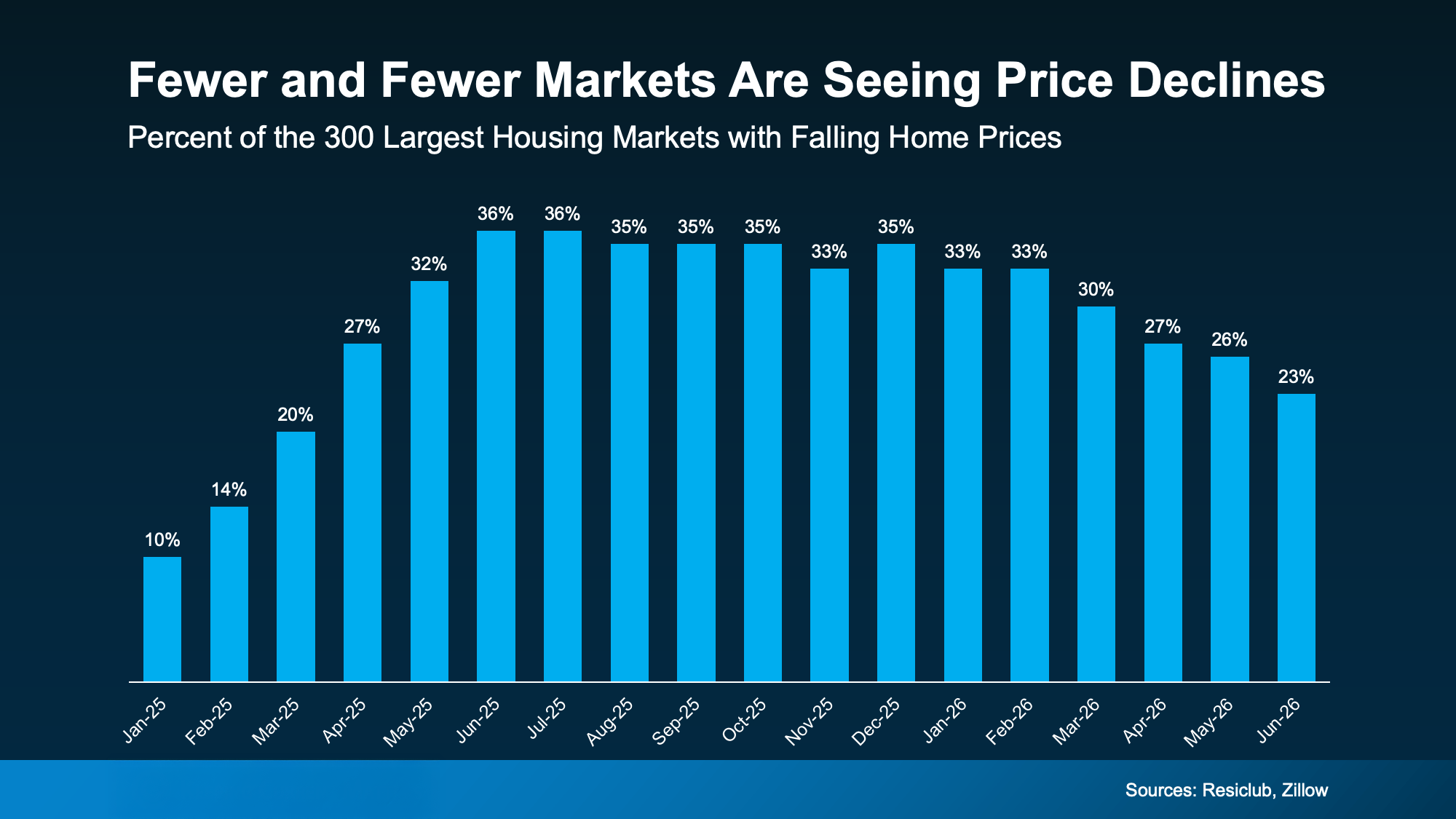
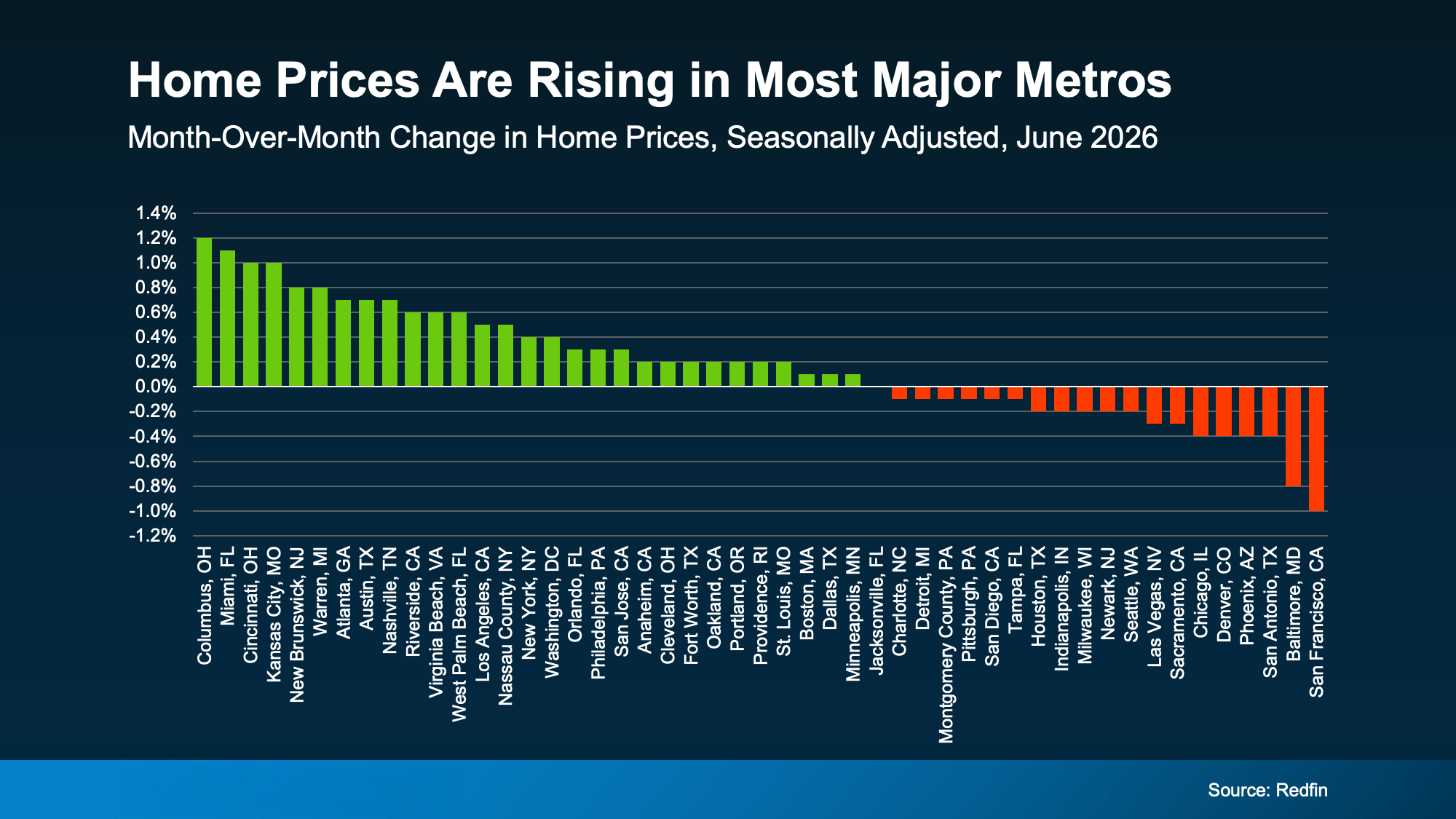
You’ve probably seen this one, too. The confusion is coming from the fact that some metros are experiencing slight price declines. And influencers are running with that and saying prices are crashing. But that’s not the reality.

Most areas are seeing prices rise, not fall. And that’s because:

  • Many homeowners aren’t selling because they don’t want to give up the low mortgage rate they locked in a few years ago. And that’s keeping a lid on how much inventory can grow.
  • Since inventory is still below pre-pandemic norms, there aren’t enough homes for sale to cause a price crash.
  • And even in markets with more inventory, some sellers are choosing to pull their homes off the market instead of cutting prices.

And those are 3 big reasons prices aren’t headed for a crash. 

And even in the markets experiencing mild declines, the drops aren’t enough to cancel out the big gains most homeowners have seen in the last 5 years (see graph below):

San Diego Home Price Declines 2026

That’s not a crash. That’s just prices moderating after a few record-breaking years.

Bottom Line

Online posts are going to make things sound worse than they are. If you want a true, data-bound look at what’s really happening in today’s market, lean on a real estate agent.

Connect with us, Hennin Foreman and The DHC Group, so you have someone to separate fact from fiction today.


Posted in Market News